Why It Matters
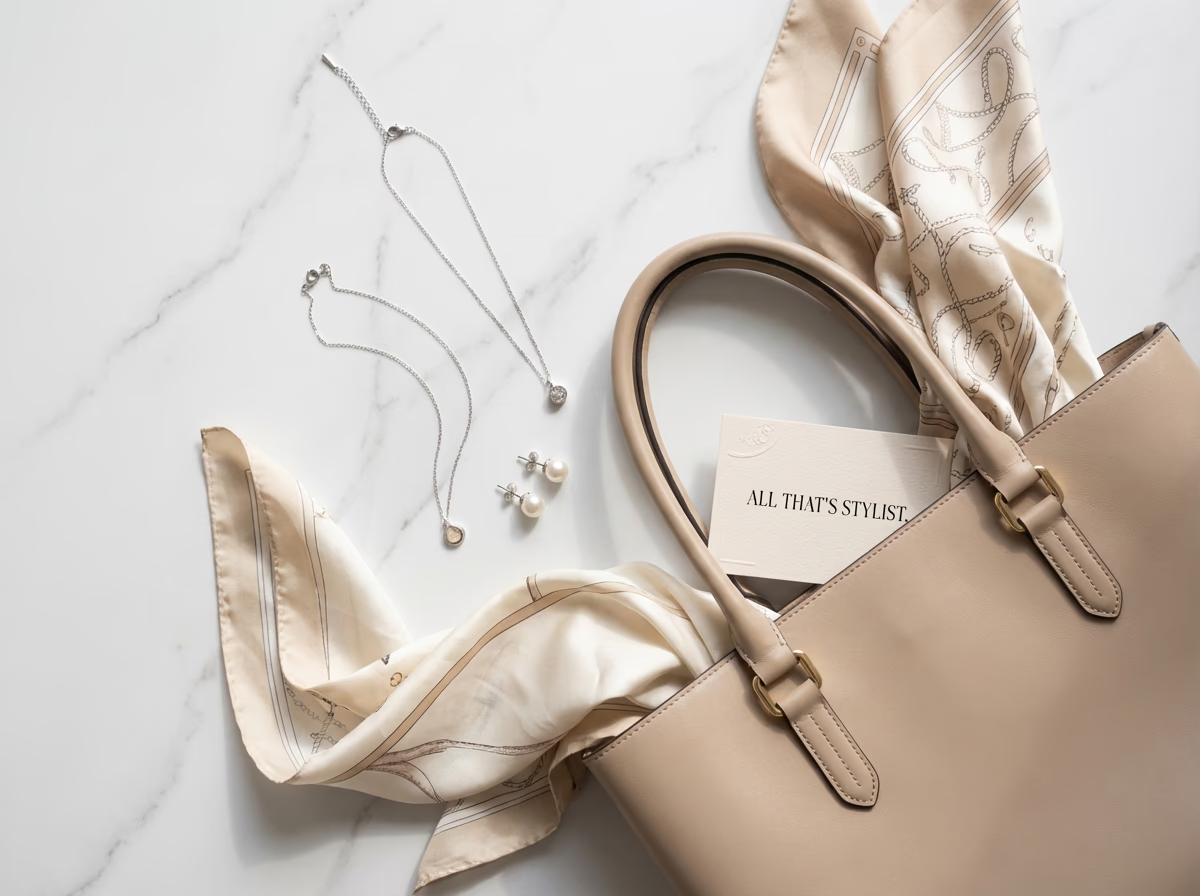
Jewelry layering has shifted from trend to permanent styling technique. Worn well, layered jewelry adds personality, visual interest, and a sense of personal curation to any outfit. It is especially powerful in smart casual and evening contexts, where accessories carry more weight than in formal or business settings.
The difference between jewelry layering that looks intentional and layering that looks messy comes down to a few simple rules. Master them and you can transform even a basic outfit into something that feels styled.
How It Works
Necklace Layering
The most visible and most commonly attempted form of jewelry layering.
| Layer | Length | Example |
|---|---|---|
| Choker / Close | 35-40 cm | Delicate chain, small pendant, or collar necklace |
| Princess / Mid | 45-50 cm | Pendant necklace, name plate, or medium chain |
| Matinee / Long | 55-65 cm | Longer chain, statement pendant, or layering chain |
The rules:
- Vary the lengths — Each necklace should sit at a clearly different level. Overlapping lengths create tangling and visual confusion.
- Vary the thickness — Combine fine chains with slightly bolder ones. All-delicate can get lost; all-bold competes for attention.
- Limit to 2-3 necklaces — More than three risks visual overload unless you are very experienced with jewelry styling.
- Match metals or mix intentionally — Gold with gold is safe. Mixing gold and silver works when it looks deliberate (a clearly intentional two-tone approach), not accidental.
Ring Stacking
- Stick to one hand as the focus — Multiple rings on both hands competes for attention
- Mix band widths — Thin bands next to wider statement rings create visual interest
- Odd numbers — Three or five rings tends to look more curated than two or four
Bracelet Layering
- One wrist at a time — Layered bracelets on both wrists is too much for most settings
- Mix textures — Chains, bangles, and cuffs together create depth
- Leave space — Bracelets should move freely, not be packed tight
When to Layer and When Not To
Layer More
- Smart casual dinners, social events, and weekend outings
- When wearing simple, minimal clothing that benefits from accessory interest
- Day-to-night transitions — adding layers upgrades a daytime look for evening
Layer Less
- Business formal and conservative business casual settings
- When the outfit already has visual complexity (prints, patterns, bold colors)
- When one statement piece (a bold earring, a significant necklace) works better alone
Common Mistakes
The most common mistake is layering jewelry that is all the same weight and length. When everything is similar, the layers blend together and the effect is lost. Contrast is what makes layering work — thin and thick, short and long, simple and detailed.
A Stylist's Take
Jewelry layering is one of the quickest ways to add personal signature to your smart casual looks. We help clients build a jewelry capsule — a small collection of layering-friendly pieces in their preferred metal that all work together interchangeably. Five to seven well-chosen pieces create dozens of combinations. The key is curation, not collection.
Related Terms
- Smart Casual for Women — The dress code where jewelry layering makes the most impact
- Day-to-Night Dressing — Using jewelry swaps as a key day-to-evening transition technique
Curate Your Jewelry Collection
Build a jewelry collection that layers beautifully and reflects your personal style. Our personal shopping service includes accessories curation — selecting the pieces that work together to give you maximum versatility and impact.
Learn more about our personal stylist services, read our color analysis guide, or explore more style guides.