Universal Music Thailand manages a roster that spans pop, hip-hop, indie, and electronic. Their artists write hooks that stick. They perform to sold-out rooms in Bangkok and stream across Southeast Asia. But the label's A&R team kept running into the same problem: strong sound, weak visual identity.
A hip-hop artist with a voice like gravel was dressing like a K-pop trainee. A pop singer with a devoted fanbase looked different in every Instagram post, every press photo, every live appearance. New signings showed up to their first shoots in whatever they'd worn to the studio that morning. The music was doing its job. The visuals were not.
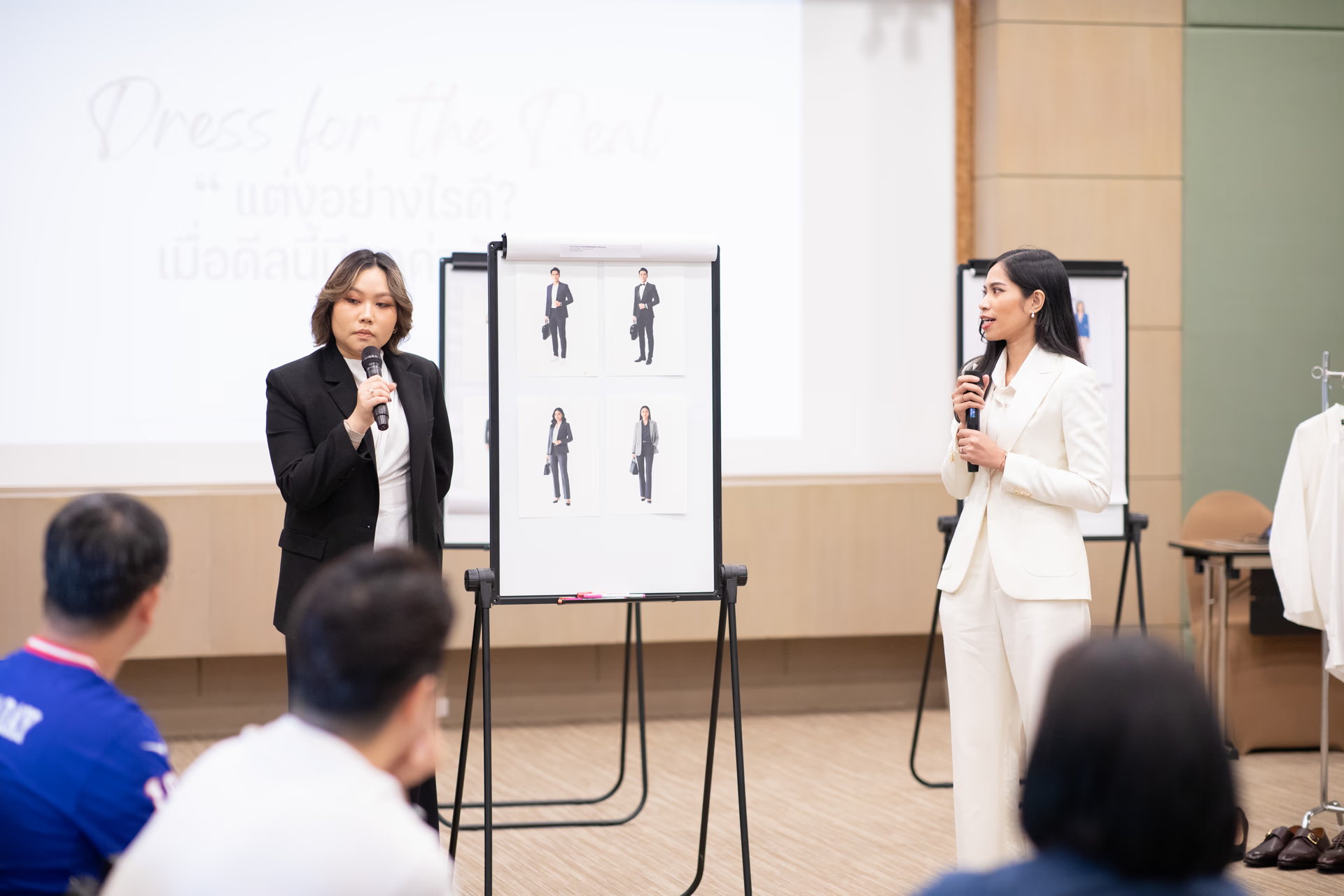
Universal Music Thailand brought us in to fix that. We built a program that gave each artist a visual language rooted in who they are and how they sound, then trained the management teams to maintain it.
What We Walked Into
Universal Music Thailand came to us during a shift in how Thai artists build audiences. Streaming had opened Thai music to listeners in Jakarta, Manila, and beyond. TikTok was minting new fanbases overnight. And every one of those new touchpoints was visual first, audio second.
The label's roster had five overlapping problems.
New Artists With No Visual Vocabulary
Newly signed artists brought strong musical instincts and blank visual slates. Some copied international artists they admired. A Thai R&B singer had built her entire wardrobe around Dua Lipa references that clashed with her melancholic, lo-fi sound. Others wore whatever was clean. Neither approach gave fans anything to latch onto.
Platform Whiplash
Established artists looked like three different people depending on where you found them. Polished in the music video, casual to the point of anonymous on Instagram Stories, overdressed for a radio interview. Fans scrolling from TikTok to YouTube to a live show couldn't build a consistent picture of who this person was.
Managers Who Could Spot Problems But Not Solutions
Artist managers knew music, contracts, and promotion. They could tell when a look missed the mark, but they lacked the vocabulary to explain why or the framework to brief a stylist. Visual decisions got made in the last 30 minutes before a shoot. Panic, not strategy.
Genre Dressing That Felt Like Costume
Thai hip-hop, indie, pop, and electronic music each carry distinct visual codes. The challenge was helping artists work within those codes without looking like they'd Googled "hip-hop outfit" that morning. We needed the styling to feel worn-in, personal, chosen.
Red Carpets and International Press
Thai artists are landing more international opportunities: award shows, cross-border collaborations, festival bills alongside global acts. These moments demand styling that holds up next to artists with entire teams behind their wardrobes. The margin for looking underprepared is zero.
How We Built the Program
We designed a three-layer system: teach the artists to think about visual identity, build their wardrobes around it, then train the management teams to keep it running after we leave.
Artist Masterclass: Sound Into Style
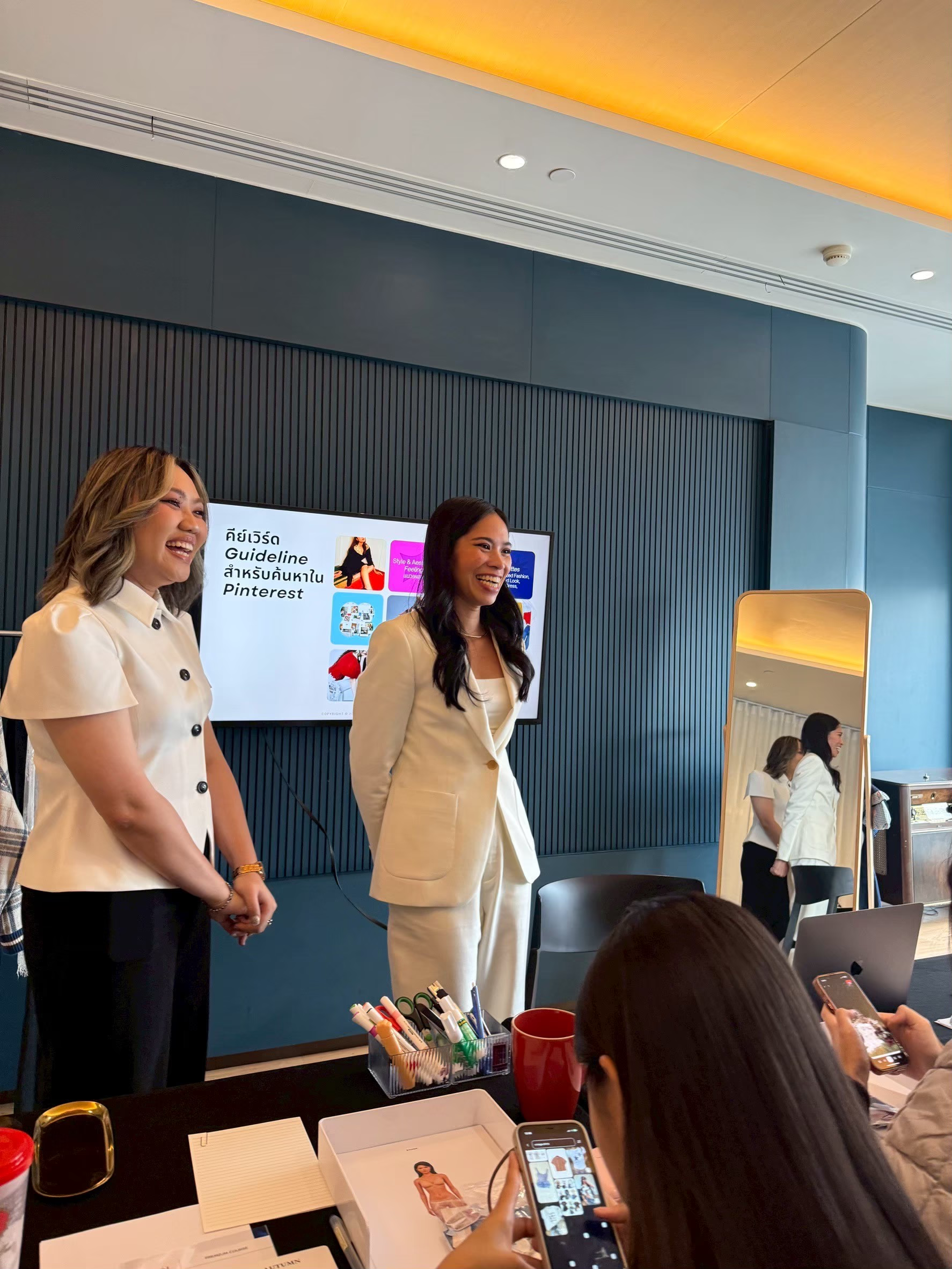
The core workshop taught artists to treat visual identity as creative practice, not an afterthought to be outsourced.
We covered four areas:
- Identity mapping: Artists defined their musical values, emotional territory, and the audience they wanted to reach, then translated those answers into visual language: colors, silhouettes, textures, cultural references
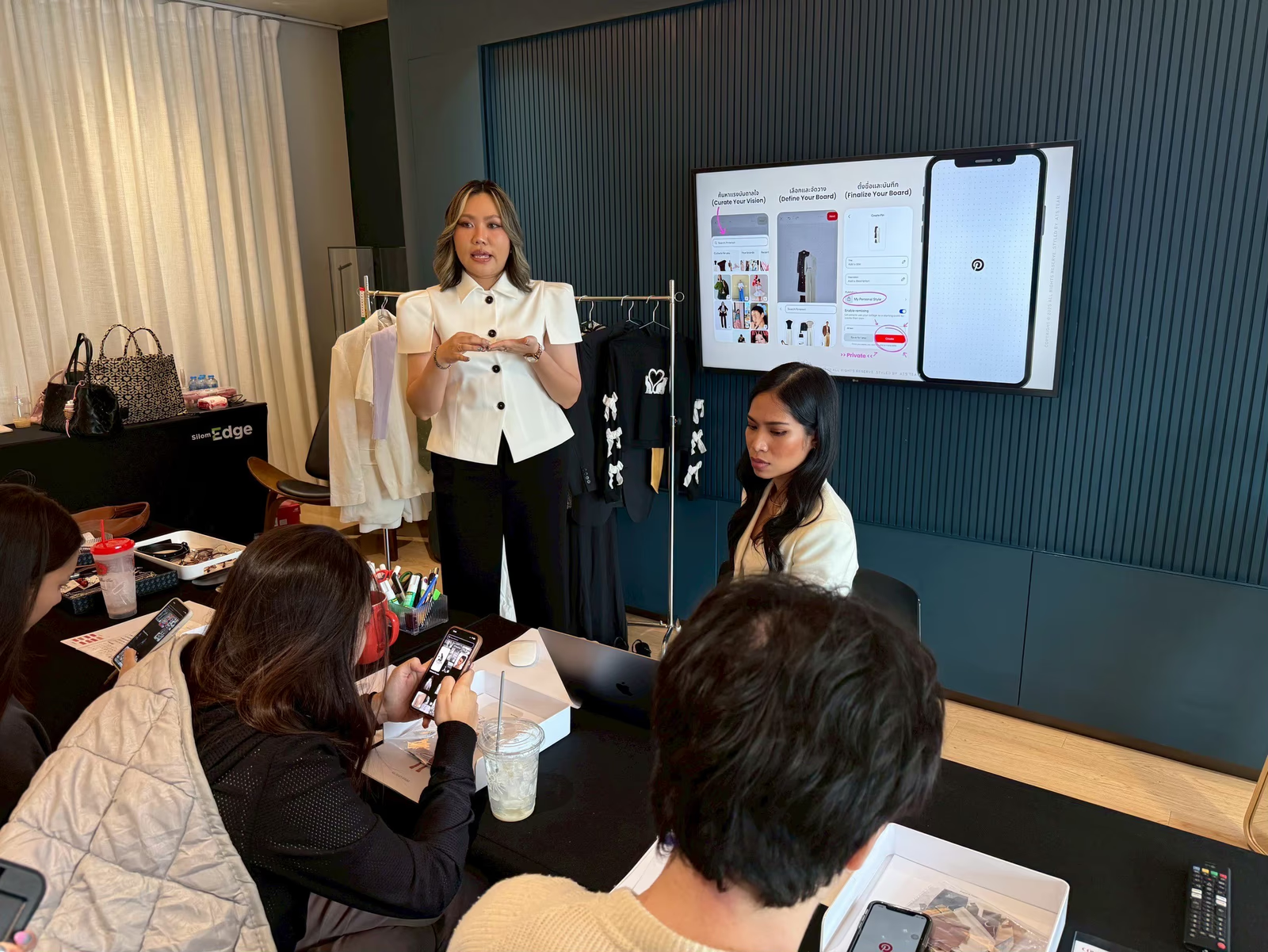
- Mood board creation: Hands-on sessions building reference boards that pulled from fashion, film, architecture, album art, and Bangkok street culture
- Wardrobe DNA: Each artist identified 5-7 recurring visual elements that would make them recognizable regardless of the specific outfit. One artist landed on oversized linen and raw silver jewelry. Another chose monochrome with a single accent color that matched her album palette.
- The wear-it-off-duty test: Every styling choice had to pass a question: "Would you wear a version of this on a Sunday?" If the answer was no, the look was a costume, not an identity.
Manager Training: Visual Literacy for Music People
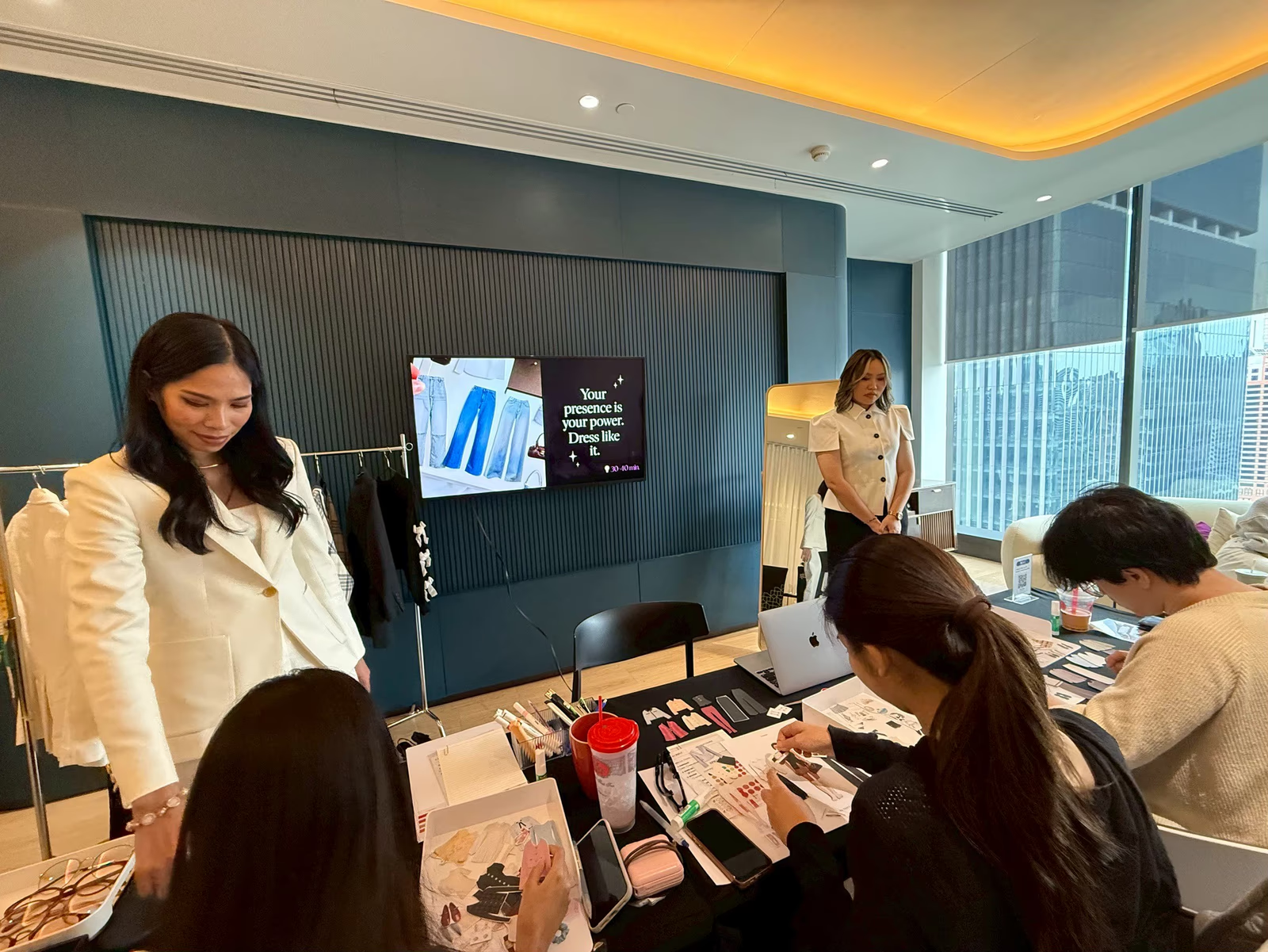
We ran three sessions for managers, A&R staff, and marketing coordinators. The goal was practical fluency, not expertise.
Training covered:
- Briefing a stylist: How to articulate visual direction with reference images and specific language instead of "make them look cool"
- Evaluating a proposed look: A framework for assessing whether a styling direction serves the artist's brand, the specific context, and the audience
- Maintaining consistency: How to document an artist's visual guidelines and keep them enforced across stylists, photographers, and content creators
- Budget allocation: Where to invest in a styling budget (key pieces that repeat across contexts) and where to save (trend-driven items for one-off content)
- Trend filtering: How to decide which trends fit an artist's established identity and which to skip
One-on-One Artist Sessions
After the group work, we sat with individual artists for private consultations:
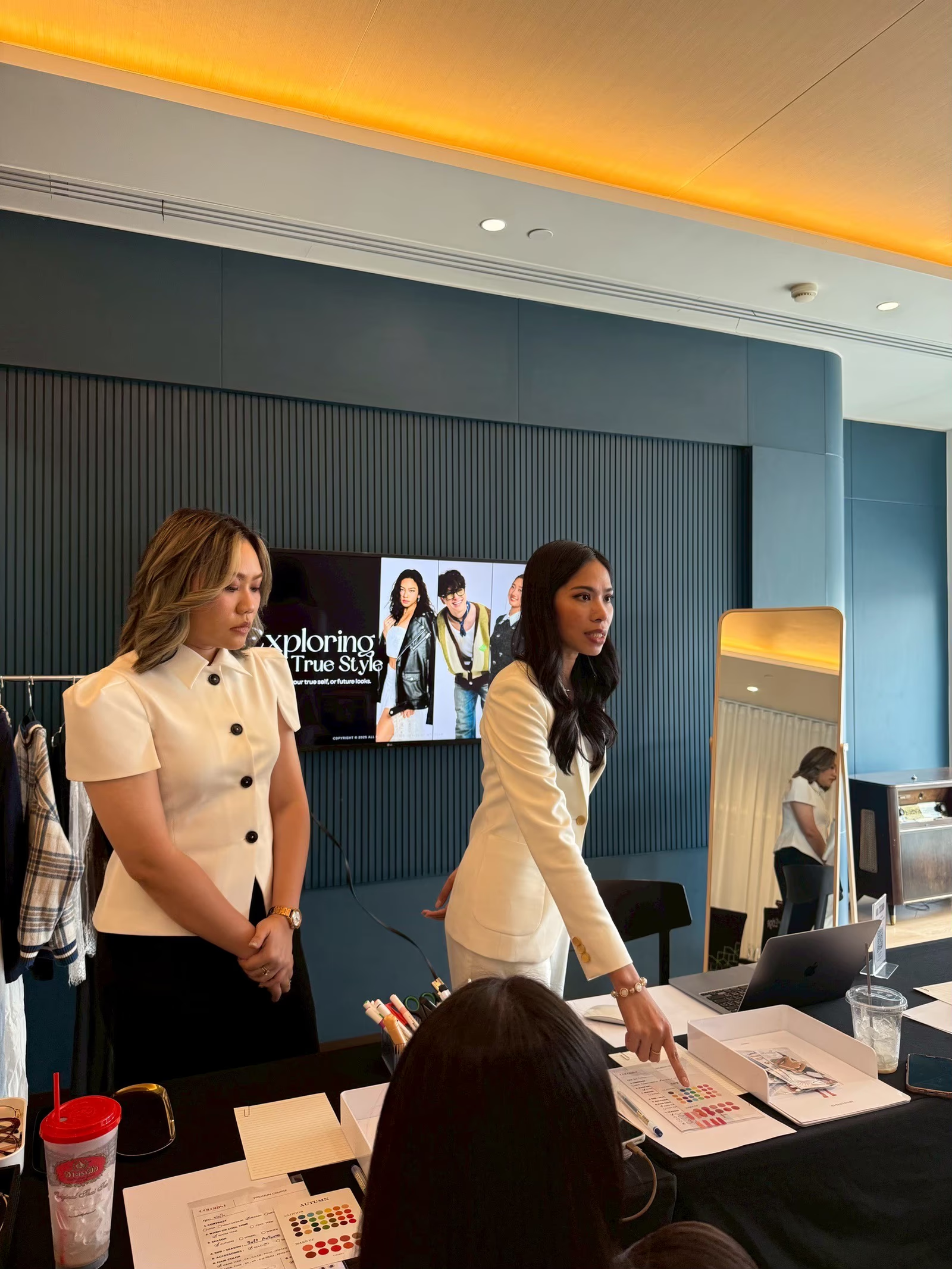
- Personal color analysis: We determined each artist's best on-camera and in-person palette. One hip-hop artist had been wearing black exclusively. We moved him into deep olive and burgundy, which suited his warm undertone and read better on camera.
- Silhouette work: We identified cuts that photograph well and perform well on stage under varied lighting
- Signature element development: Each artist defined one or two visual trademarks. A specific accessory category, a fabric commitment, a silhouette they own.
- Wardrobe roadmap: A seasonal plan tied to release cycles, tour dates, and promotional campaigns
Artist Development Process
We built the visual identity process to be repeatable for every new signing.
Phase 1: Discovery
We started with listening. We studied each artist's catalog, interviewed them about their influences and ambitions, reviewed their existing visual content, and mapped their audience. The goal was to understand who the artist already was, not who they thought they should look like.
Phase 2: Visual Strategy
From discovery, we produced a strategy document for each artist: primary color palette, secondary accents, preferred silhouettes, texture guidelines, reference imagery, and a list of visual boundaries. This document became the single source of truth for every styling decision going forward.
Phase 3: Implementation
We built key looks for immediate needs: upcoming music video shoots, press tours, social media content. Each look was photographed and documented with full styling notes so another stylist or the artist could reproduce it.
Phase 4: Evolution
Visual identity has to grow with the artist. We built in quarterly reviews where the visual direction could shift alongside musical development and audience growth, keeping the core identity stable while the surface stayed current.
Program Deep Dive
Visual Identity Workshop
The workshop ran a full day and most artists described it as the first time anyone had asked them to think about visual identity as a creative discipline rather than a logistical problem.
Morning session: Who Are You?
We started with exercises that had nothing to do with clothing. Artists wrote about their earliest musical memories, the emotions they wanted their audiences to carry out of a live show, and two words they wanted associated with their name. This conceptual groundwork became the foundation for every visual decision.
Afternoon session: What Does That Look Like?
With their creative identity articulated in words, we translated it into visual language. Working with physical fabric swatches, color cards, and curated image libraries, artists built comprehensive mood boards. A hip-hop artist whose music explored urban resilience gravitated toward deconstructed streetwear with unexpected soft textures: raw-hem hoodies over silk tanks. An indie artist channeling nostalgia and rural Thailand built a palette around muted earth tones and vintage-inspired workwear silhouettes.
Several artists told us later that the workshop changed how they thought about songwriting too. Articulating who they were through one medium sharpened their instincts in another.
Social Media Style Strategy
Social media is where fans see artists most often, and where visual consistency falls apart fastest. Content gets made on phones, in dressing rooms, at 2 a.m. after a session. There is no stylist present for most of it.
We built low-effort systems that hold the identity together:
- The content capsule: A curated selection of 10-15 interchangeable pieces that photograph well, align with the artist's visual identity, and work for the majority of casual content scenarios
- Location and lighting awareness: How outfit choices interact with the places artists create content most often: home studios, rehearsal spaces, Bangkok street food spots, rooftop bars
- The 70/30 rule: Maintain visual identity 70% of the time. Use the other 30% to experiment, try new references, and keep the feed alive.
- Off-duty credibility: Strategies for "casual" content that still reinforces the visual identity without looking calculated. The Instagram story in a hotel lobby. The TikTok from a taxi. These moments build fan trust precisely because they look unplanned.
Performance and Stage Styling
What works on a phone screen often disappears on a festival stage. Stage styling operates by different rules.
We addressed the specific demands of live performance:
- Movement and comfort: Every stage outfit was tested for range of motion and breathability under stage lighting. An artist who is tugging at a collar or pulling down a hem cannot perform.
- Visual scale: We taught principles of visual scale for large venues. Bolder silhouettes, higher contrast, accessories that read from 50 meters.
- Lighting interaction: How fabrics behave under colored stage lighting. Matte versus reflective surfaces. Colors that wash out under blue or red wash. Textures that catch spotlights.
- Quick-change logistics: For artists with multiple looks per set, we developed transition systems that maintained visual coherence between outfits
- Bangkok venue realities: Outdoor festivals in 35-degree humidity require different fabric choices than air-conditioned club shows. We planned for both.
Media and Press Appearance Preparation
Press interviews, award shows, and television appearances each require a different calibration. We prepared artists for high-visibility moments:
- On-camera fundamentals: Cameras compress and flatten. We adjusted fit, color, and accessories to account for this. No small patterns that create moire effects. Necklines that frame the face. Colors that complement the artist against standard press backdrops.
- Red carpet strategy: We built event looks that photograph well from multiple angles, create a single memorable image for the press cycle, and remain comfortable during hours of standing and posing
- Interview styling: Looks that project confidence without competing for attention with what the artist is saying. The audience should remember the conversation, not the outfit, while still registering that the artist looked sharp.
- International versus domestic calibration: We adjusted styling for Thai media versus international press, where cultural context and audience expectations diverge
The Results
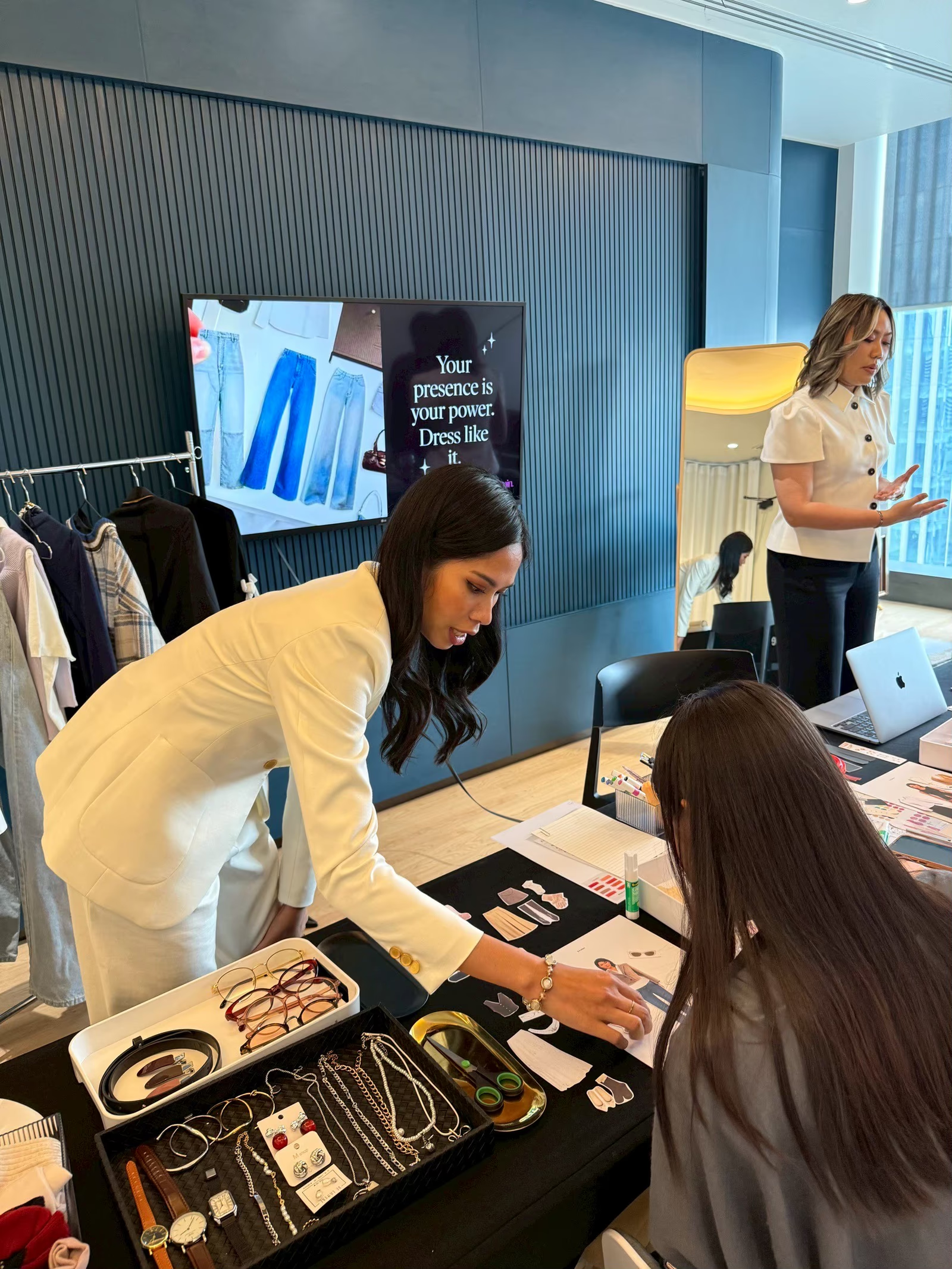
We tracked outcomes over six months following the program launch through platform analytics, internal brand audits, and qualitative feedback from artists and managers.
By the Numbers
- Social media visual content engagement rose 40% across participating artists' accounts. We measured average engagement rates on visual-focused posts (outfit reveals, behind-the-scenes styling content, styled photoshoots) before and after the program.
- Brand consistency scores improved 3x in the label's internal brand audit, which evaluated visual coherence across each artist's Instagram, TikTok, YouTube, press photos, and live performance imagery
- Last-minute styling emergencies dropped 60%. Managers stopped making panicked calls the night before shoots because artists and their teams had established visual frameworks and pre-built look libraries to pull from.
- 95% of participants applied at least three techniques from the training within the first 30 days
What Changed in the Room
The most visible shift was in how artists showed up to work. Before the program, most treated styling as something other people did to them. Afterward, they arrived at shoots with visual references. They pushed back on looks that didn't fit their strategy. They engaged in real creative dialogue with stylists instead of standing passively.
One emerging pop artist, who had relied on stylists to choose every outfit, began co-designing her music video wardrobe within weeks of her consultation. A hip-hop artist who had been cycling between unrelated streetwear aesthetics settled into a defined visual signature that his fans started recognizing and replicating.
These shifts went beyond wardrobe. Artists reported feeling more confident directing their own photoshoots, providing input on album artwork, and shaping the visual narratives of their social media presence.
How the Management Team Operates Now
The manager training created a multiplier effect. Managers reported:
- Greater confidence making styling-related decisions and giving constructive feedback to artists
- More productive relationships with external stylists and creative directors because they could articulate clear briefs
- Better budget allocation, with less money wasted on styling experiments that didn't serve the artist's established direction
- Stronger collaboration between management, marketing, and creative teams around visual brand decisions
Before this program, visual identity was always the last thing we thought about — something we scrambled to figure out the night before a shoot. Now it is part of our artist development process from day one. The framework All That's Stylist gave us has fundamentally changed how we build and support our artists' brands. Our artists feel more confident, our creative briefs are sharper, and the results speak for themselves in the content we are producing.
Why Labels Are Investing in Professional Styling
The work with Universal Music Thailand reflects a larger pattern across the entertainment industry. Labels that treat visual identity as core infrastructure, rather than a last-minute expense, are seeing measurable returns.
The Streaming Economy Runs on Thumbnails
Thousands of new songs hit streaming platforms every day. Visual identity is often what earns the first click. A listener scrolling through a recommendation feed makes split-second decisions based on an artist photo, an album cover, a video thumbnail. The music might be excellent. If the visual doesn't stop the scroll, nobody finds out.
Labels that invest in their artists' visual development are investing in discoverability at every touchpoint.
Visual Platforms Are Where Fanbases Live
Thai artists build and maintain their audiences on Instagram, TikTok, YouTube, and LINE. Even Spotify now prioritizes visual elements: artist photos, playlist covers, Canvas videos. An artist without a cohesive visual strategy is competing with one channel muted.
Authenticity Takes Work
Here is the tension at the center of entertainment styling: audiences detect manufactured looks instantly, but they also expect polish and consistency from working artists. Closing that gap requires structured visual strategy. The look has to feel like the artist chose it because they love it, and it has to hold together across 50 different contexts in a month.
Thai audiences are particularly attuned to this. Fan communities notice when an artist's style shifts, celebrate signature looks, and discuss wardrobe choices in granular detail. An artist whose visual identity reads as forced or disconnected from their personality will hear about it.
The Returns Are Trackable
Social media engagement rates, brand partnership valuations, press coverage quality, and fan merchandise conversion all correlate with visual identity strength and consistency. For labels making portfolio-level investment decisions, professional styling produces data, not just aesthetics.
Beyond Universal Music Thailand
The framework we built for Universal Music Thailand works across the entertainment industry. Record labels developing new talent. Management companies guiding established artists. Production houses styling on-camera talent. Individual artists building their own visual brand.
The underlying principle holds: visual identity must grow from the artist's real self and musical DNA. We find it, codify it, build it into a wardrobe, and train the people around the artist to protect it.
Who We Work With
Our entertainment styling programs serve:
- Record labels developing cohesive visual identities across their rosters, from debut acts to headliners
- Artist management companies integrating visual strategy into artist development from signing day forward
- Individual artists and performers who want to own their visual brand instead of outsourcing it
- Production companies and content creators who need consistent on-camera styling across series, shows, and branded content
- Event organizers and promoters who need artists and presenters projecting a polished image at festivals, award shows, and brand activations
We bring deep knowledge of both fashion and the Thai entertainment landscape. We understand the cultural nuances of the Thai market, the practical demands of Bangkok's climate and production environments, and the global visual standards that Thai artists must meet as their reach extends internationally through photoshoot styling and personal styling services.
From emerging artists defining their visual identity to established talents evolving their brand, we provide the strategic styling expertise the entertainment industry demands. Our programs are customized to your roster, your genre landscape, and your business objectives.
Get in touch to explore how we can elevate your artists' visual presence.
Entertainment & Media Styling
Strategic visual identity development for artists, entertainers, and media personalities. Includes individual consultations, team training, and ongoing styling partnerships.
Learn more →Related Services:
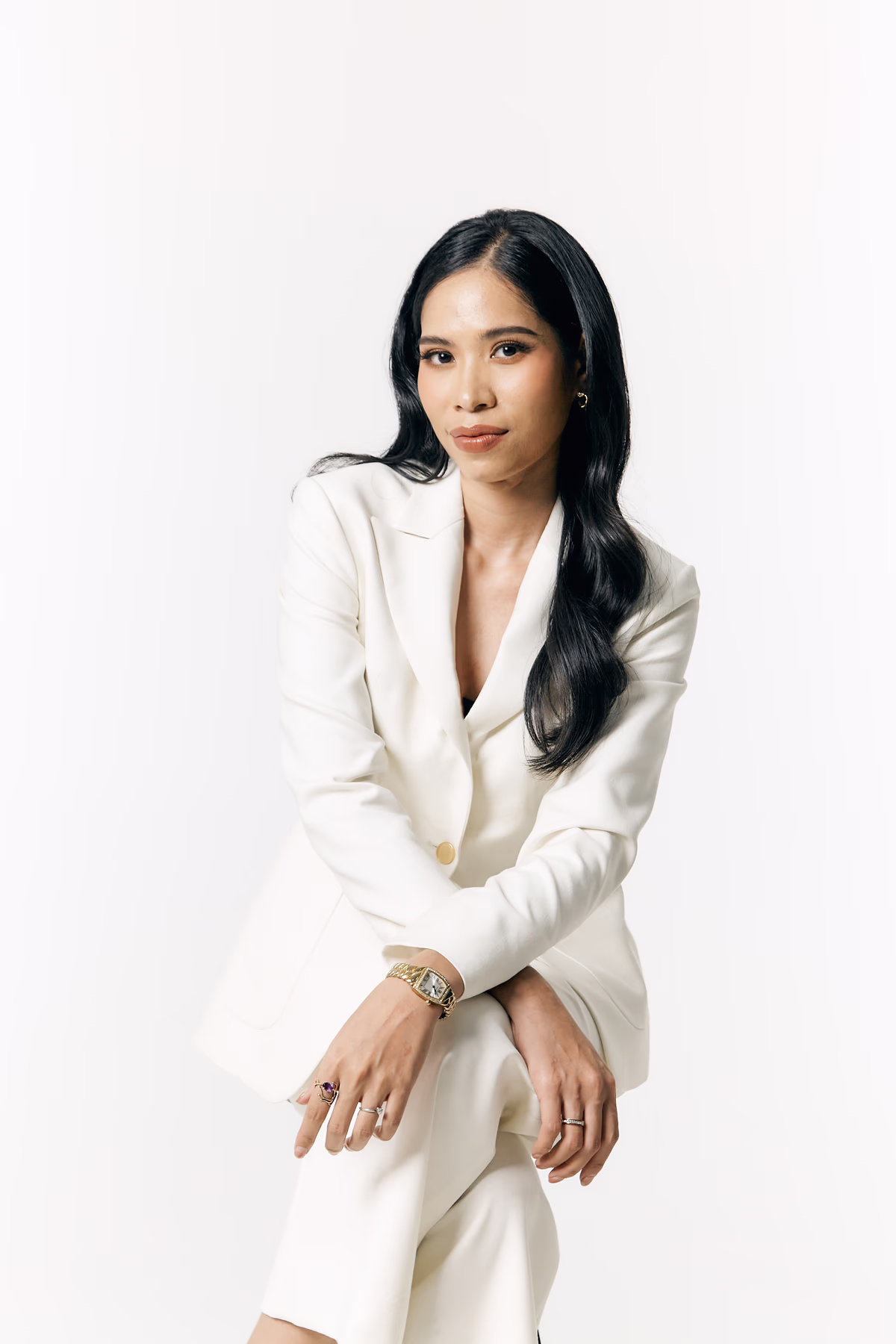
Napasorn (Mind) Phetpirun
Co-Founder & Head Stylist• 8+ years experience
Mind is the key driving force behind the vision and creative direction of All That's Stylist. With over 8 years of experience in fashion styling, including Commercial and Editorial Styling, she brings together creativity, precision, and a deep understanding of personal branding. At All That's Stylist, she serves as Head Stylist, Image Strategist, and Project Lead, overseeing creative standards, team direction, and the quality of outcomes delivered to corporate and private clients.