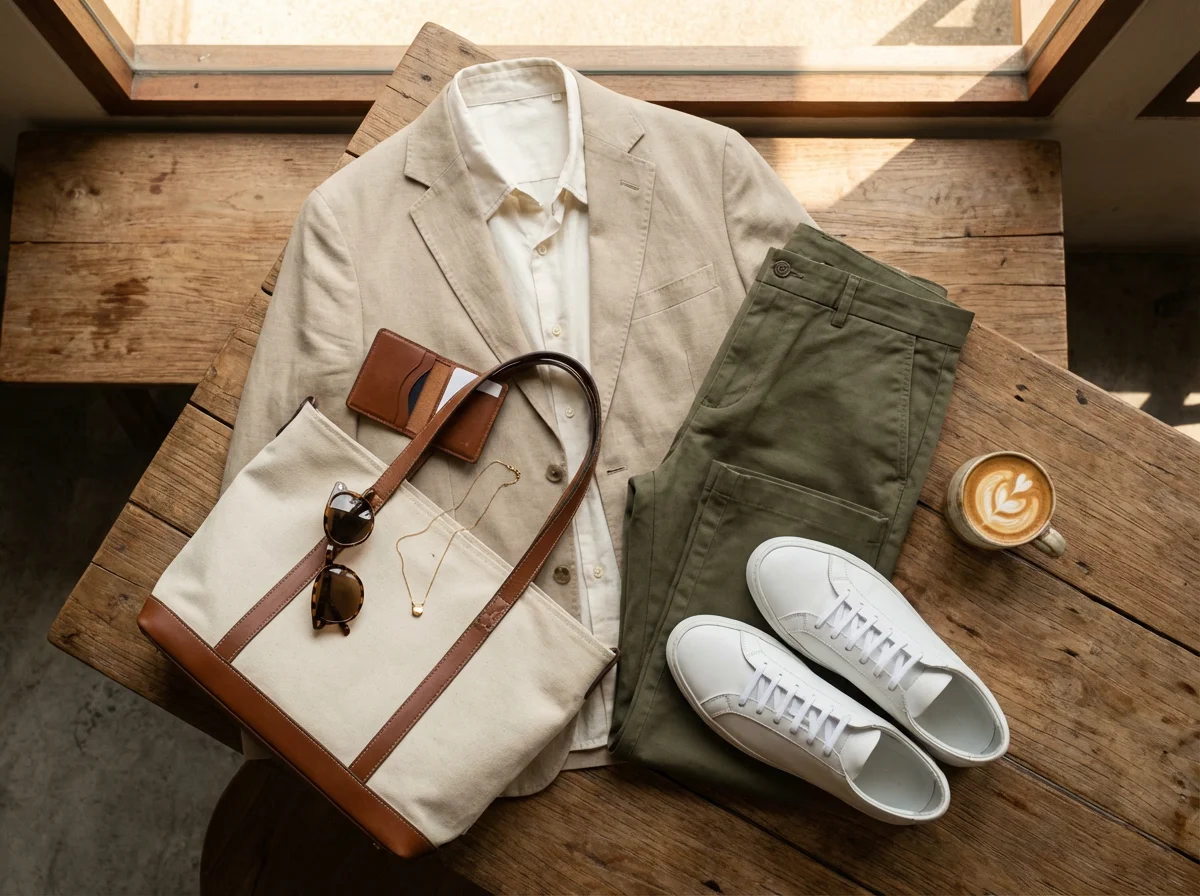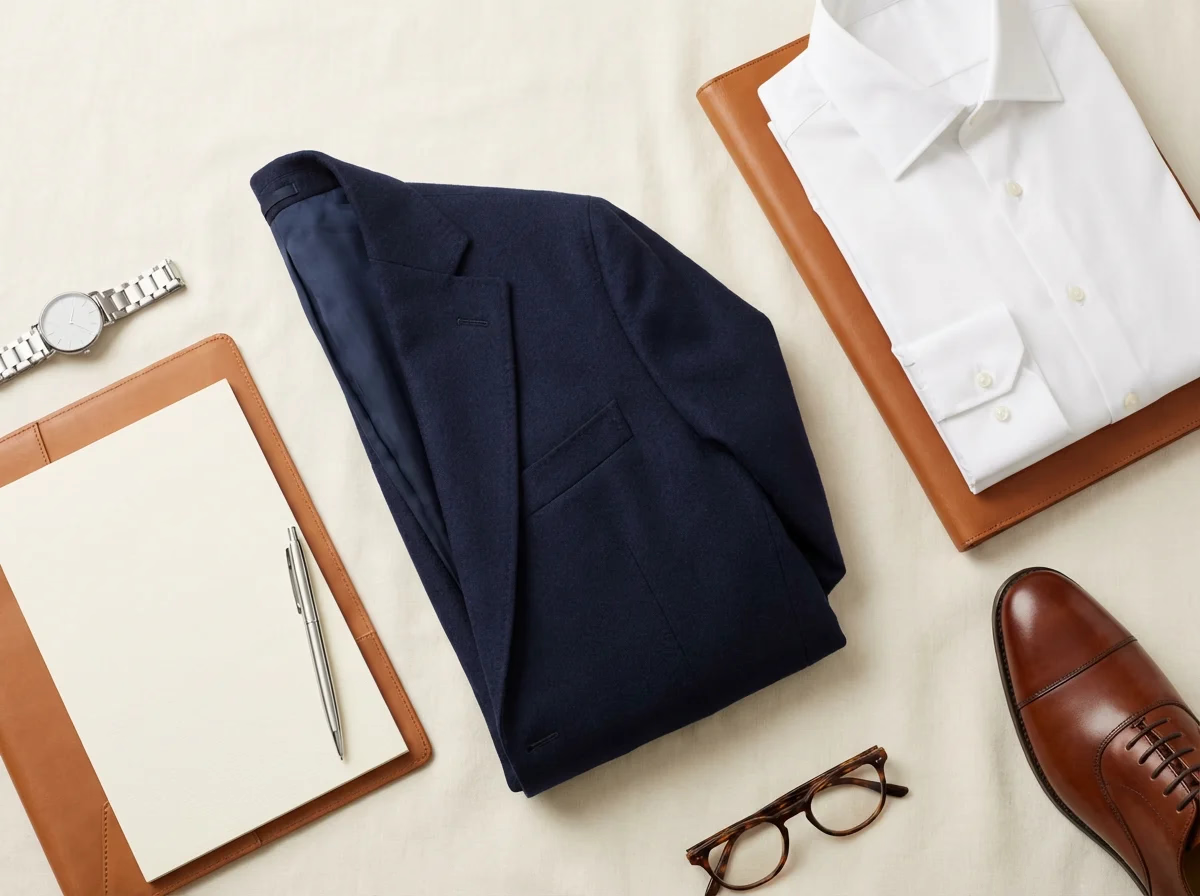
A Sukhumvit-based investment firm that manages portfolios for some of Thailand's wealthiest families noticed a disconnect. The financial analysis was first-rate. The team's appearance was not keeping pace. Their managing director put it plainly: clients worth eight figures form opinions before the presentation begins.
The firm employs 55 professionals across wealth management, client relations, and fund analysis. Some wore heavy worsted suits better suited to Zurich. Others arrived in untucked polos. A few junior analysts wore suits that fit like borrowed clothes. The effect, taken as a whole, was inconsistency. For a firm pitching itself as a cohesive, premium advisory practice, that inconsistency carried a cost.
All That's Stylist was brought in to close the gap: give every member of the team a working knowledge of how to dress for Bangkok's climate, their clients' expectations, and the firm's positioning.
The Challenge
The managing director identified four problems during initial conversations with our team.
Inconsistent Professional Image
Each person interpreted "investment-firm professional" according to their own instincts. Some resembled barristers. Others looked ready for a Saturday brunch. There was no shared visual standard, and clients noticed the disconnect between the firm's polished marketing materials and the varied appearance of its advisors.
Junior Staff Without a Framework
Recent graduates had no reference point for finance-appropriate dressing. They oscillated between stiff, ill-fitting suits that signaled discomfort and business-casual combinations too relaxed for meetings with clients managing nine-figure portfolios.
Bangkok at 33 Degrees
Finance dress codes were written for cities where people commute underground in 18-degree weather. Bangkok runs at 30 to 35 degrees Celsius with humidity above 80% for most of the year. Team members who wore traditional heavy-wool suiting arrived at client meetings visibly uncomfortable. Perspiration is not a trust signal.
Money Spent, Clothes Unworn
Several client-facing professionals reported wardrobes full of purchases that never left the hanger. Pieces bought in air-conditioned malls proved uncomfortable, hard to combine, or wrong for the context. The pattern was consistent: frequent spending, low rotation, growing frustration.
The Commercial Reality
The firm's clients include entrepreneurs, corporate executives, and inherited-wealth families. These clients have high expectations. In competitive pitches against rival firms, the team's visual coherence could influence the outcome. Leadership treated professional image styling as a business investment, not a perk.
The Solution
We designed a program tailored to this firm's specific culture, client base, and climate challenges. The goal was practical knowledge that would change daily behavior.
Pre-Workshop Assessment
Two weeks before the session, we surveyed all 55 participants. The survey covered:
- Current wardrobe frustrations and gaps
- Daily commute method (BTS, car, walking distance from station to office)
- How often they met clients face-to-face and in what settings
- Comfort levels with different dress codes
- Monthly clothing budget and shopping habits
The responses shaped every module. A junior analyst commuting forty minutes on the BTS needs different fabric advice than a managing director who drives door-to-door.
The Half-Day Workshop
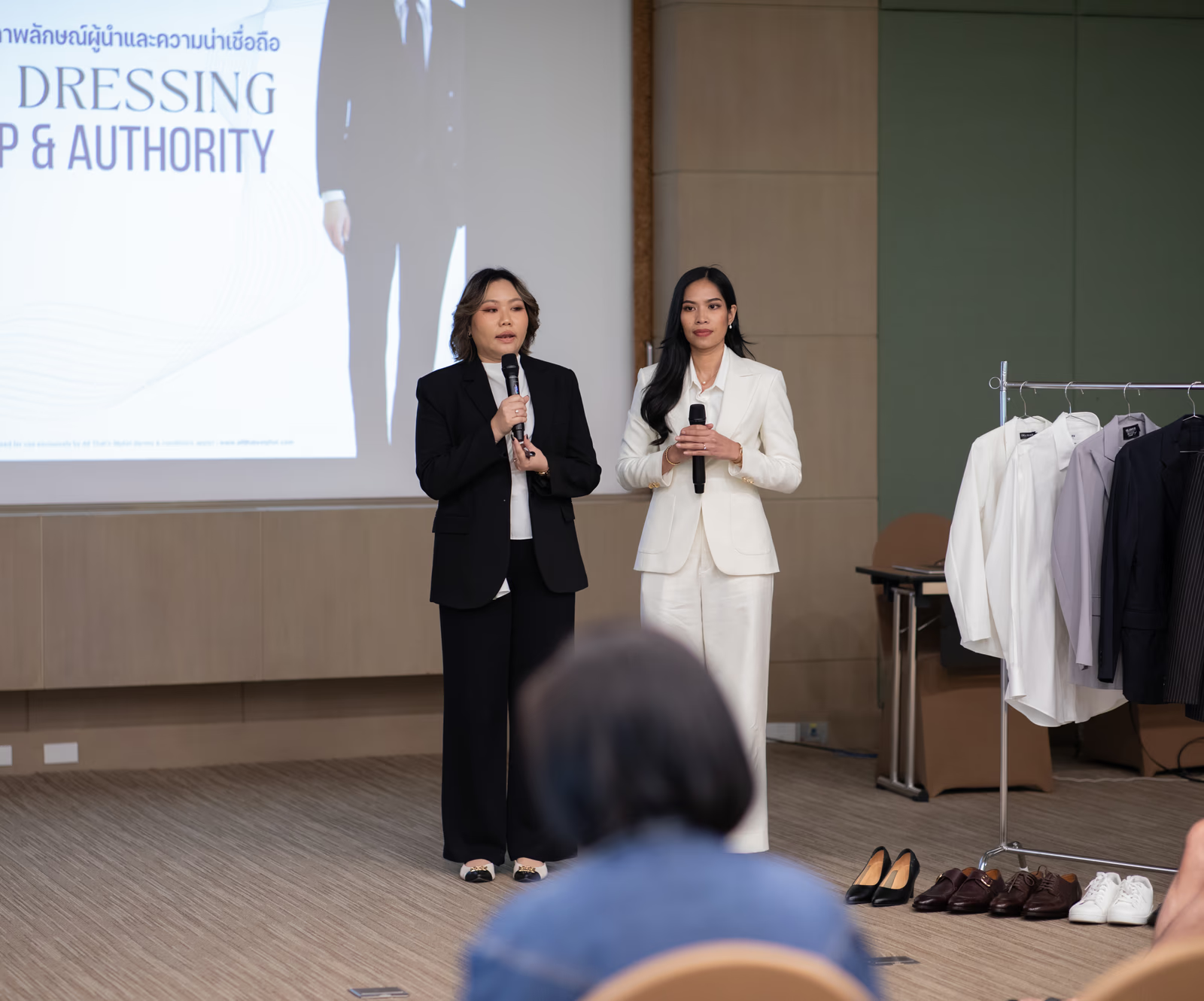
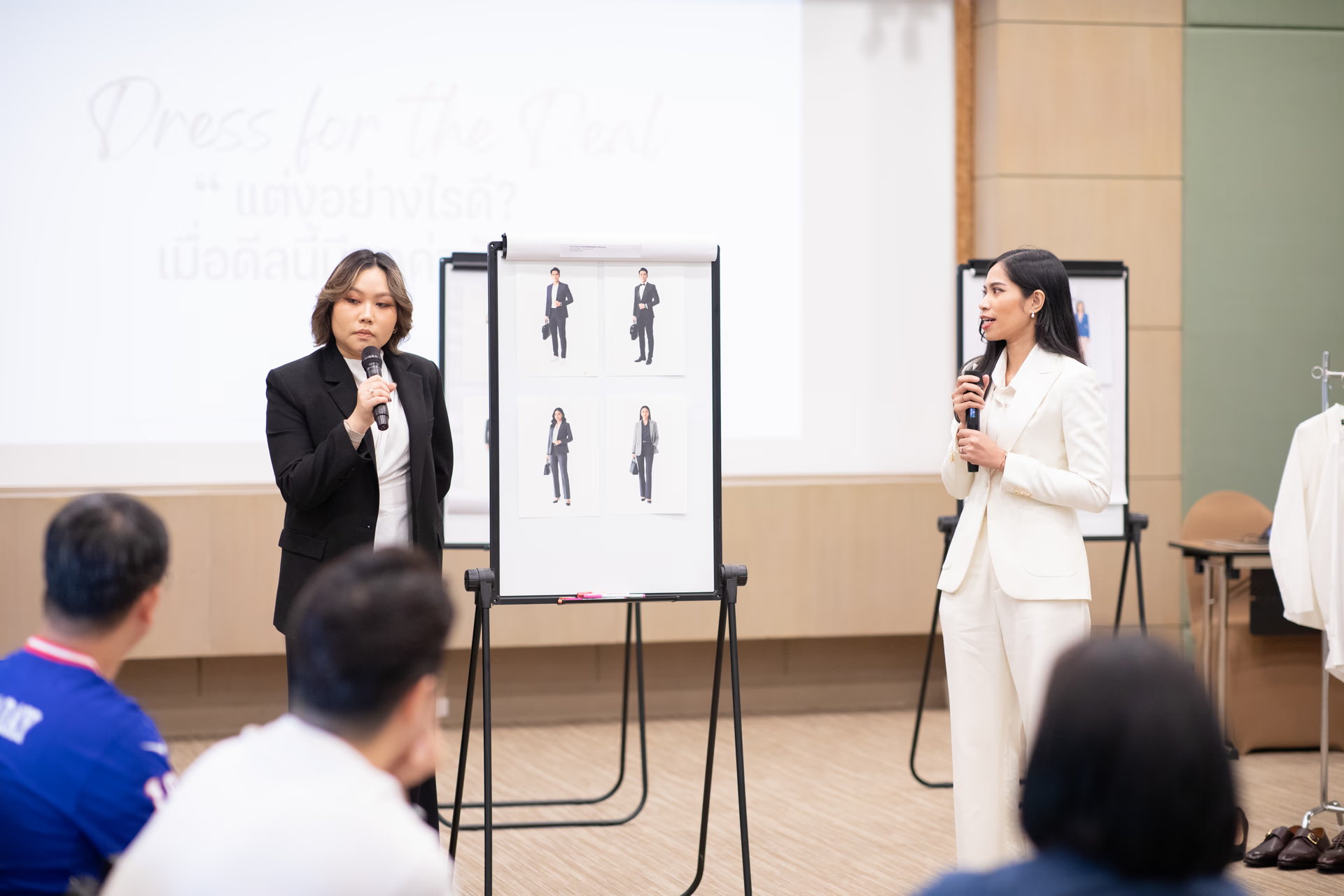
We structured the session as four modules, each building on the one before. No lectures. Every module included hands-on exercises.
Module 1: How Clothing Functions in Financial Services
We opened with the research on perception in advisory relationships:
- The seven-second window: Studies on how clients form trust judgments before a word is spoken
- Color and authority: Navy reads as trustworthy in advisory settings. Black can feel adversarial. Warmer neutrals signal approachability for relationship managers.
- The halo effect in action: How a well-fitted jacket shifts perceived competence, even when technical skills are identical
- Segmented expectations: Ultra-high-net-worth clients, corporate treasurers, and entrepreneurial founders each bring different visual benchmarks
Module 2: Dressing for 33 Degrees and 80% Humidity
This module generated the most relief in the room. We addressed the core tension: how to maintain a sharp silhouette when the weather works against you.
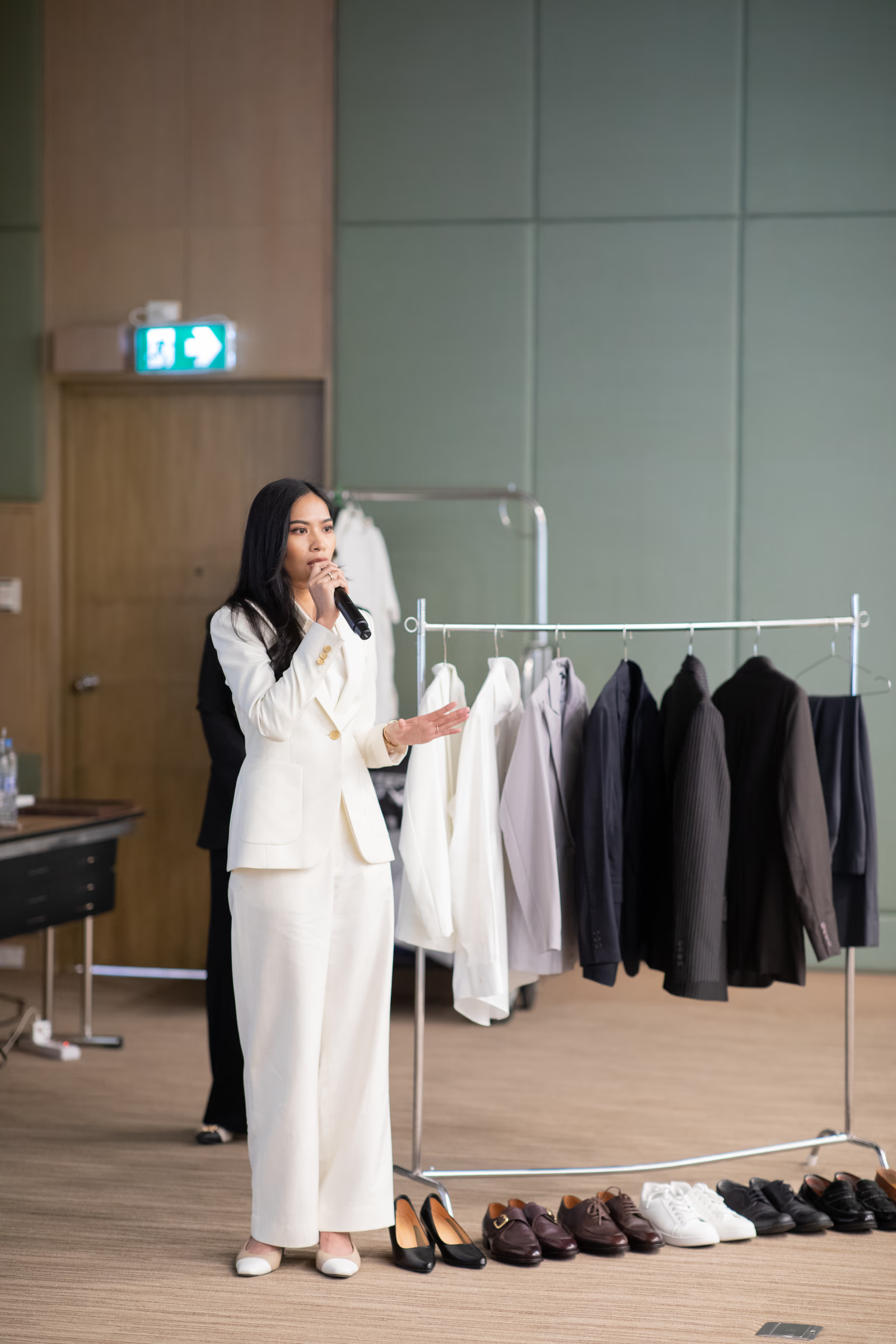
- Fabric comparison, hands-on: Participants handled swatches of tropical-weight wool (220g), high-twist cotton, linen-blend suiting, and technical performance fabrics. They felt the weight difference between a standard worsted and a tropical weave.
- The office-blazer system: Commute in a single breathable layer. Keep two blazers at your desk. Add structure before meetings.
- Moisture management: The role of quality undershirts, breathable undergarments, and pre-meeting freshening routines
- The five-minute recovery: How to go from BTS platform to client-ready in the office bathroom
For more on this topic, see our complete guide to business casual dressing in Bangkok.
Module 3: Building a Finance Wardrobe That Works
We moved from principles to application:
- The fifteen-piece capsule: Fifteen core items that produce over thirty distinct professional outfits
- Budget allocation: Where to invest in quality (suits, shoes, one good watch) and where to buy affordable staples (cotton shirts, undershirts, belts)
- Bangkok sourcing: Specific brands and tailors accessible in the city at each price point
- The client-meeting uniform: Three to four pre-assembled combinations that require zero decision-making at 6:30 a.m.
- Grooming as completion: Hair, nails, skincare, and fragrance guidelines that round out a professional presentation
Module 4: Practical Style Audit Exercises
The final module made the learning tangible:
- Photo audit: Participants assessed anonymized photos of professional outfits, identifying fit issues, color mismatches, and proportion problems
- Live color analysis: Fabric drapes held against volunteers' faces demonstrated how the right shade of white or blue shifts perceived vitality
- Fit assessment in pairs: Team members evaluated each other's current outfit using a structured checklist covering shoulders, waist, sleeve length, and trouser break
- Personal action plans: Each participant left with a written plan: three specific changes to implement within two weeks
Individual Leadership Consultations
After the group session, we spent 30 minutes with each of the firm's eight senior leaders: managing directors, department heads, and client relationship managers. These sessions covered:
- Personal color analysis matched to each leader's complexion and coloring
- Wardrobe recommendations calibrated to their specific client demographics
- Strategies for moving between contexts: board meetings, client dinners at hotel restaurants, industry conferences, casual team gatherings
- Detailed shopping lists with specific items, brands, and Bangkok retail locations
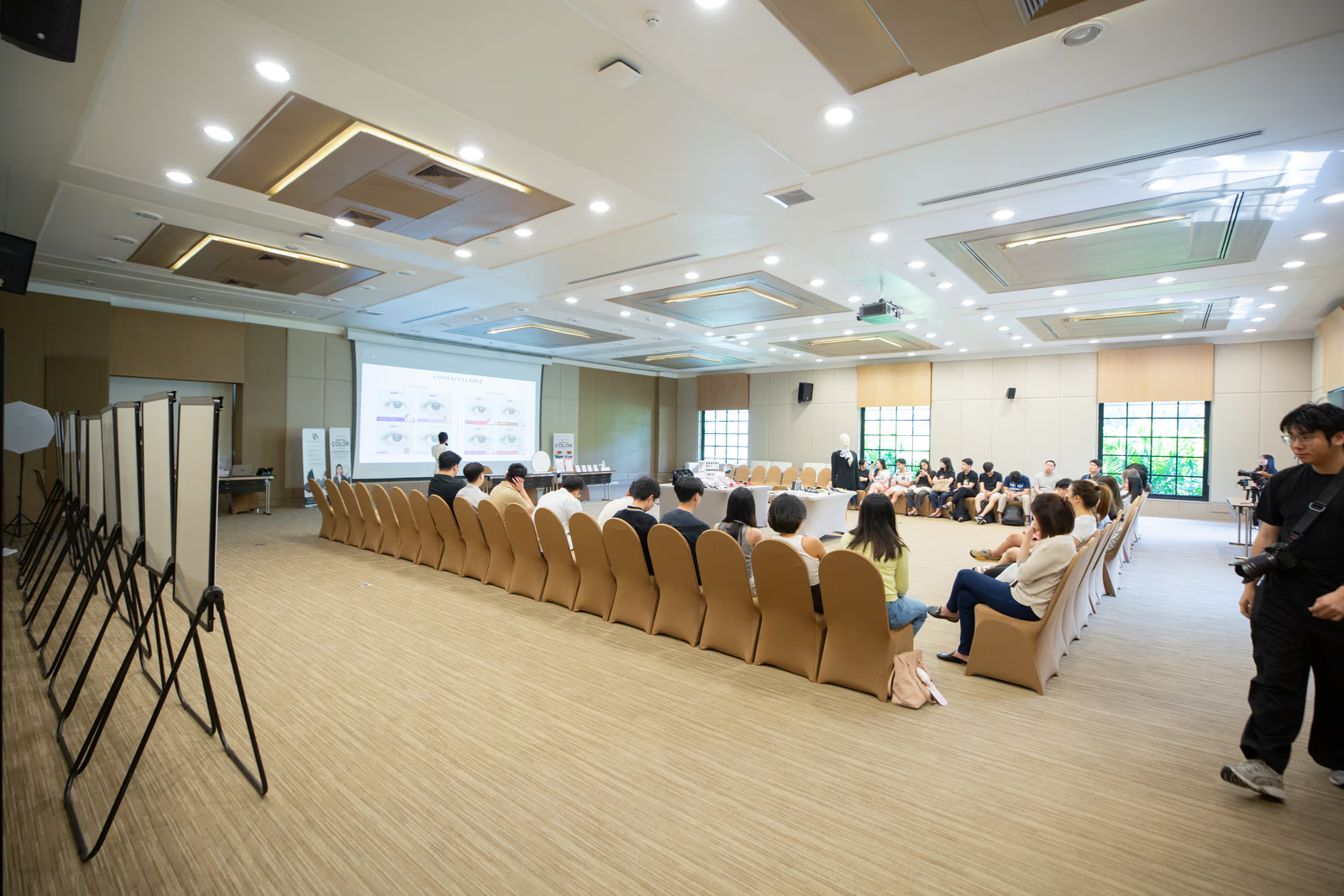
Before and After
| Dimension | Before Workshop | After Workshop |
|---|---|---|
| Team dress consistency | Highly inconsistent across departments | Unified professional standard with individual expression |
| Junior staff confidence | Uncertain, defaulting to ill-fitting suits or too-casual attire | Clear framework for finance-appropriate dressing |
| Climate adaptation | Heavy suits causing visible discomfort | Lightweight, breathable fabrics maintaining sharp appearance |
| Morning routine | 30+ minutes deciding what to wear | Under 10 minutes using capsule wardrobe system |
| Wardrobe spending | Frequent purchases of unworn items | Strategic investments in versatile, high-rotation pieces |
| Client-meeting readiness | Variable; some team members underprepared | Consistent polished presentation across all team members |
Workshop Highlights
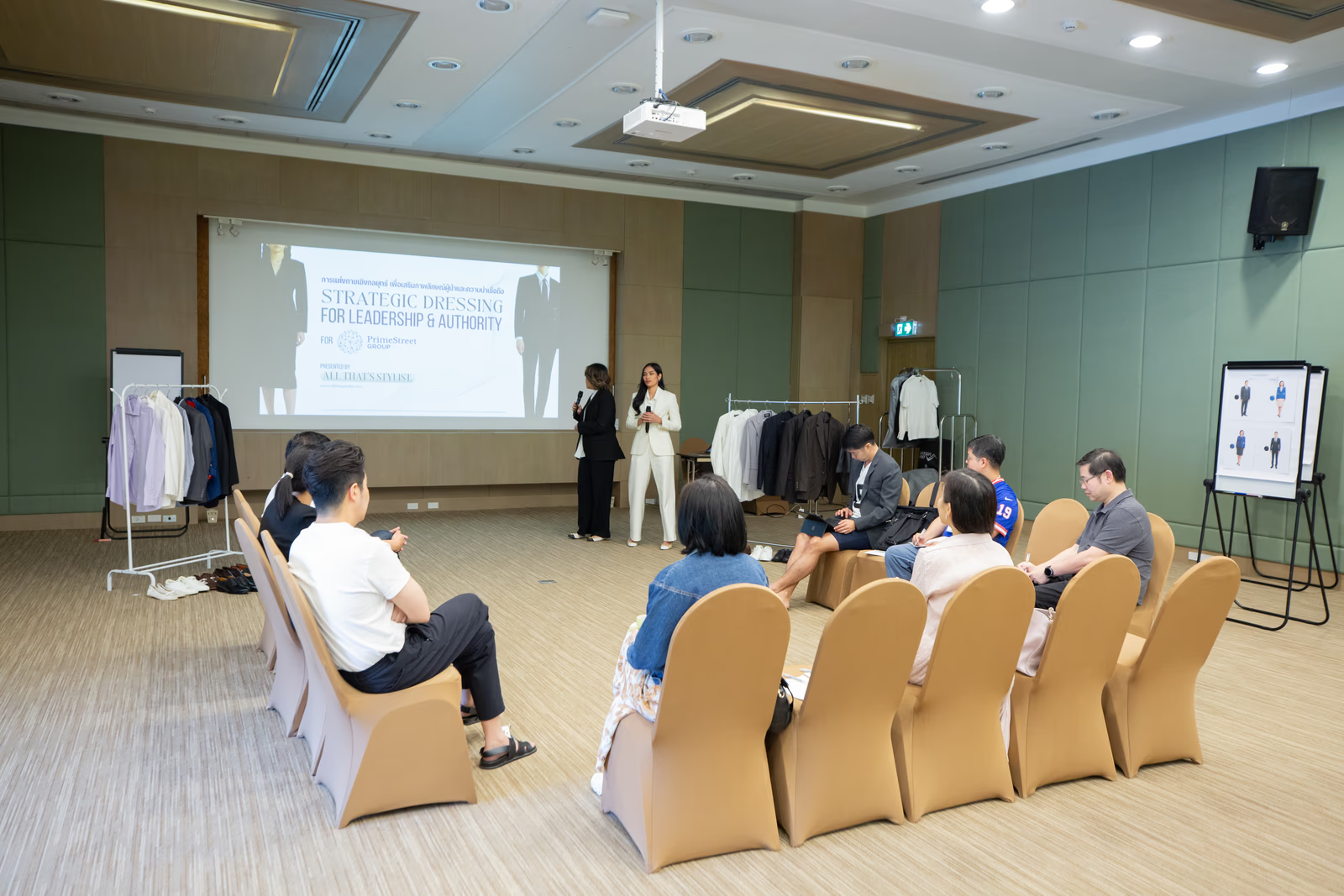
Participants referenced four segments most often in follow-up feedback.
The Color of Trust: Color Psychology for Finance
We draped fabric swatches against volunteers' shoulders in front of the group. The effect was visible from the back row. The same person looked authoritative in navy, approachable in warm gray, and washed out in black.
Participants discovered:
- Navy outperforms black in advisory contexts because it conveys trust without confrontation
- Earth tones (olive, camel, warm gray) suit relationship managers who need to read as approachable
- The difference between cool white and warm white shifts how rested and healthy a face appears
- A pocket square or scarf in the right accent color adds personality without breaking professional norms
Several participants identified why specific pieces in their existing wardrobe had always felt wrong. The colors were fighting their natural coloring.
Bangkok Heat-Proof Professional Dressing
This segment drew the strongest response. The tension between looking sharp and feeling comfortable in tropical heat is something every Bangkok professional lives with.
The strategies that generated the most discussion:
- The office blazer system: Keep two to three blazers at the office. Commute in a lighter layer. Add the structured piece before meetings. Several participants started doing this the following Monday.
- Tropical-weight wool blends: Participants who had worn standard-weight worsted their entire career were surprised by how light a 220-gram tropical wool feels on the body.
- The undershirt layer: A quality moisture-wicking undershirt eliminates visible perspiration marks without adding perceptible bulk.
- Shoe rotation: Alternating two to three pairs of leather shoes extends each pair's life and allows them to dry properly between wears. In Bangkok's humidity, this matters more than in drier climates.
Business Casual vs. Business Professional: Drawing the Line
This segment resolved ongoing internal disagreements. Many team members had been guessing at where the boundary fell, leading to both overdressing and underdressing within the same department.
We established clear guidelines for the firm:
- Client-facing days: Structured blazer or suit jacket. Trousers, not chinos. Dress shoes.
- Internal days: High-quality polo or collared shirt. Dark chinos permitted. Loafers or clean minimal-profile shoes.
- Friday standard: Smart casual. One level below client-facing. No jeans, no trainers. More relaxed fabrication and color palette.
- Off-site events and conferences: Guidance on adapting the base wardrobe for professional social contexts
Quick Wins: Five-Minute Morning Upgrades
We closed the interactive portion with changes participants could implement the next morning:
- The tuck test: Proper shirt tucking transforms a silhouette in thirty seconds
- The sleeve roll: The correct method for rolling shirt sleeves produces a polished casual look. The incorrect method produces a sloppy one. The difference is two folds.
- The belt upgrade: Replacing a cheap belt with a quality leather one is the single highest-impact change under 1,000 baht
- The three-point mirror check: Shoulders, waist, length. Ten seconds. Catches the majority of fit problems.
- Collar stays: How to keep collars crisp through a full working day using stays and proper overnight storage
The Results
The firm's HR team conducted post-event surveys at one week and one month. The numbers confirmed what the managing director could see on the office floor.
Quantitative Outcomes
At the one-month follow-up, participants reported measurable changes:
- Morning dressing time dropped by an average of 15 minutes as team members adopted the capsule wardrobe approach and began pre-planning weekly outfits
- 73% received unprompted positive comments about their appearance from colleagues, clients, or family members within two weeks
- Client feedback scores for "professionalism" rose 12% in the firm's quarterly client satisfaction survey, conducted six weeks after the workshop
- Wardrobe spending fell by an estimated 30% as team members shifted from impulse purchases to planned investments in versatile pieces
Qualitative Feedback
The HR team noted changes that went beyond clothing:
- Team members reported a stronger sense of collective identity when representing the firm
- Junior staff described reduced morning anxiety about what to wear, freeing up mental bandwidth for the actual work
- Client-facing professionals said they felt steadier walking into meetings, particularly with new prospects
- The workshop created unexpected social bonds across departments. People who had limited interaction found common ground over shopping recommendations and fit tips.
An Unexpected Side Effect
The firm's HR director told us that the workshop improved interdepartmental relationships. Team members from separate floors and functions started exchanging wardrobe advice, sharing tailor recommendations, and offering feedback on each other's outfits. A shared vocabulary around professional dressing became a connection point across the organization.
We expected practical advice. We did not expect the cultural shift. Our team carries themselves with more cohesion now, and our high-net-worth clients have noticed. Their feedback has been positive. On a pure return-on-investment basis, this was one of the most effective professional development programs we have run.
What Other Firms Can Take from This
The principles from this workshop apply to any organization where professionals meet clients face-to-face. Five lessons stood out.
1. Visual Consistency Reinforces Brand Trust
When every member of a team presents a coherent standard of professionalism, clients register it as reliability. They may not articulate it. They feel it. For financial services firms, where trust is the product, that feeling matters.
2. Climate-Appropriate and Professional Are Not Opposites
The biggest shift in the room came when participants realized they could look sharp and feel comfortable in Bangkok's heat. The right fabrics, construction, and layering strategies make both possible. A 220-gram tropical wool blazer does not feel like a 350-gram worsted one.
3. Education Produces Better Results Than Rules
A written dress code generates compliance at best and resentment at worst. Teaching people the reasoning behind choices creates genuine adoption. Every participant in this workshop understood why navy reads as trustworthy. That understanding outlasts any policy memo.
4. Small Changes Compound
The five-minute morning upgrades segment proved that a wardrobe overhaul is not required. A better belt. Proper tucking. The right shade of white for your skin tone. These adjustments cost little, take seconds, and shift the overall impression.
5. Strategic Purchasing Reduces Spending
The team members who spent the most on clothing before the workshop were often the least well-dressed. Their wardrobes were full of impulse buys that did not combine with each other. Fewer, better pieces chosen for versatility reduced their overall spend while improving what they wore each day.
Ready to Transform Your Team's Professional Image?
Every organization projects a visual identity, whether or not it was chosen on purpose. Our corporate workshops give your team the knowledge to make that identity a strategic asset. Each program is built around your industry, culture, team size, and objectives. We design half-day intensive workshops and ongoing styling partnerships that produce measurable results.
Contact us to discuss your team's needs and receive a customized proposal.
Corporate Styling Workshop
Bespoke corporate workshops tailored to your industry, team size, and professional image objectives. Includes pre-workshop assessment, interactive group sessions, and optional individual leadership consultations.
Learn more →Related Services:
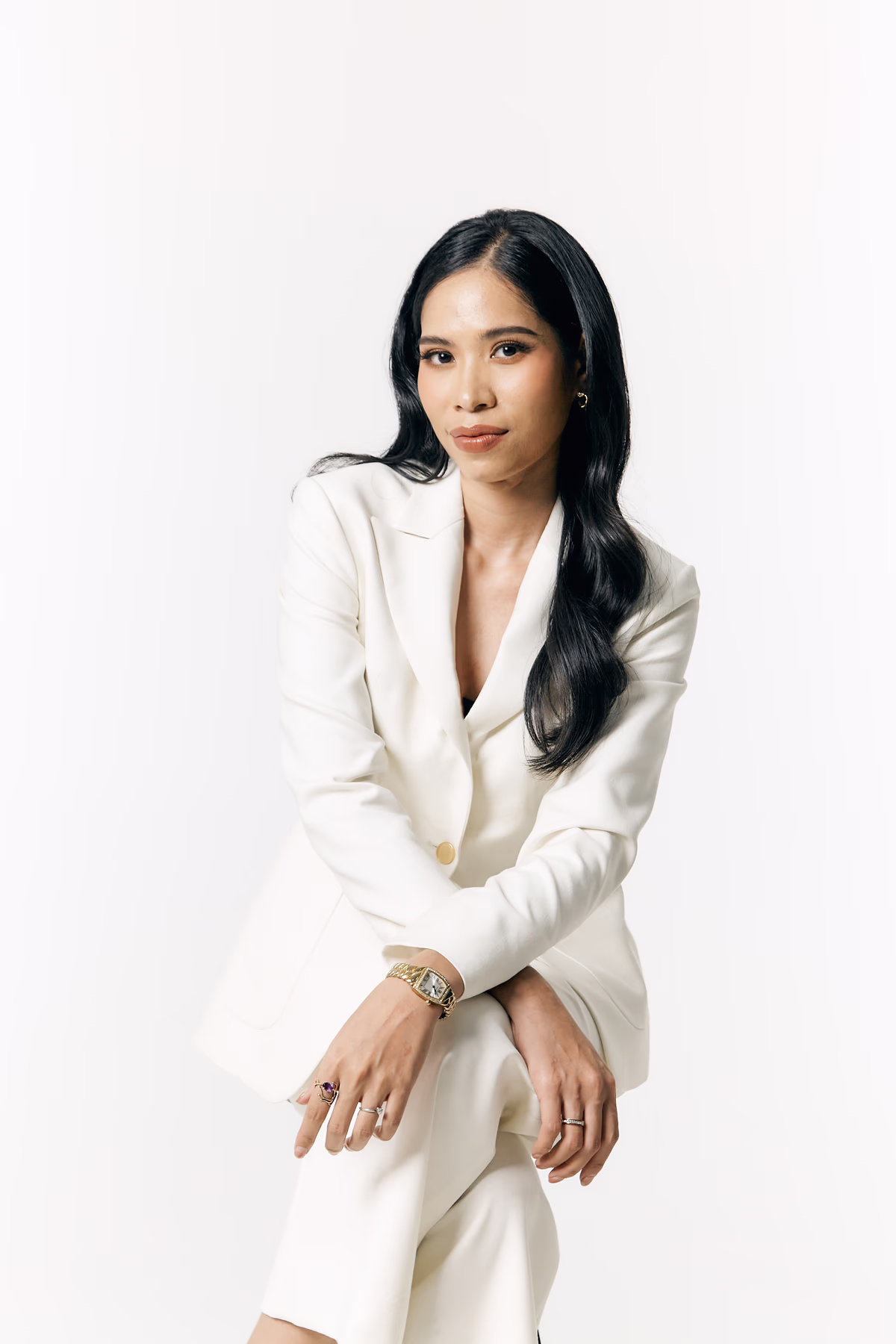
Napasorn (Mind) Phetpirun
Co-Founder & Head Stylist• 8+ years experience
Mind is the key driving force behind the vision and creative direction of All That's Stylist. With over 8 years of experience in fashion styling, including Commercial and Editorial Styling, she brings together creativity, precision, and a deep understanding of personal branding. At All That's Stylist, she serves as Head Stylist, Image Strategist, and Project Lead, overseeing creative standards, team direction, and the quality of outcomes delivered to corporate and private clients.