Why It Matters
Body shape advice is one of the most searched fashion topics online — and one of the most poorly handled. Decades of magazine advice reduced complex, beautiful bodies to fruit comparisons (apple, pear, hourglass) and prescribed rigid rules about what you "should" and "should not" wear. Much of that advice is outdated and limiting.
That does not mean body shape is irrelevant. Understanding your proportions genuinely helps you choose clothes that fit well and make you feel confident. The difference is approach. Instead of "hide your hips" or "create the illusion of an hourglass," modern styling focuses on balance, proportion, and personal expression. You dress for the body you have and the mood you want — not someone else's ideal shape.
How It Works
The Traditional Body Shapes (and Their Limits)
The classic system identifies five main body shapes:
| Shape | Description | Outdated Advice | Modern Approach |
|---|---|---|---|
| Hourglass | Balanced shoulders and hips, defined waist | Lucky you — wear everything | Define or not — your choice, not a rule |
| Pear / Triangle | Hips wider than shoulders | Draw attention upward, hide hips | Celebrate your curves or balance — both are valid |
| Apple / Round | Weight around the middle | Create a waist, empire lines | Proportional dressing, comfort-first choices |
| Rectangle | Similar measurements top to bottom | Create curves, add volume | Clean lines suit you beautifully as-is |
| Inverted Triangle | Shoulders wider than hips | Add volume to lower body | Lean into strong shoulders or soften — your preference |
What Professional Stylists Actually Do
Modern stylists have moved beyond the fruit-shape model. Instead, they assess:
- Proportions — Where your waist sits relative to your legs (high or low waist), your torso-to-leg ratio, and your shoulder-to-hip relationship
- Vertical line — Your overall height and how to use clothing to elongate or balance
- Body type systems — Tools like Kibbe body types that go deeper than simple shape categories
- Personal preference — What you want to highlight, minimize, or leave as-is
- Lifestyle needs — Your actual daily requirements, not theoretical outfit scenarios
Start With Your Measurements
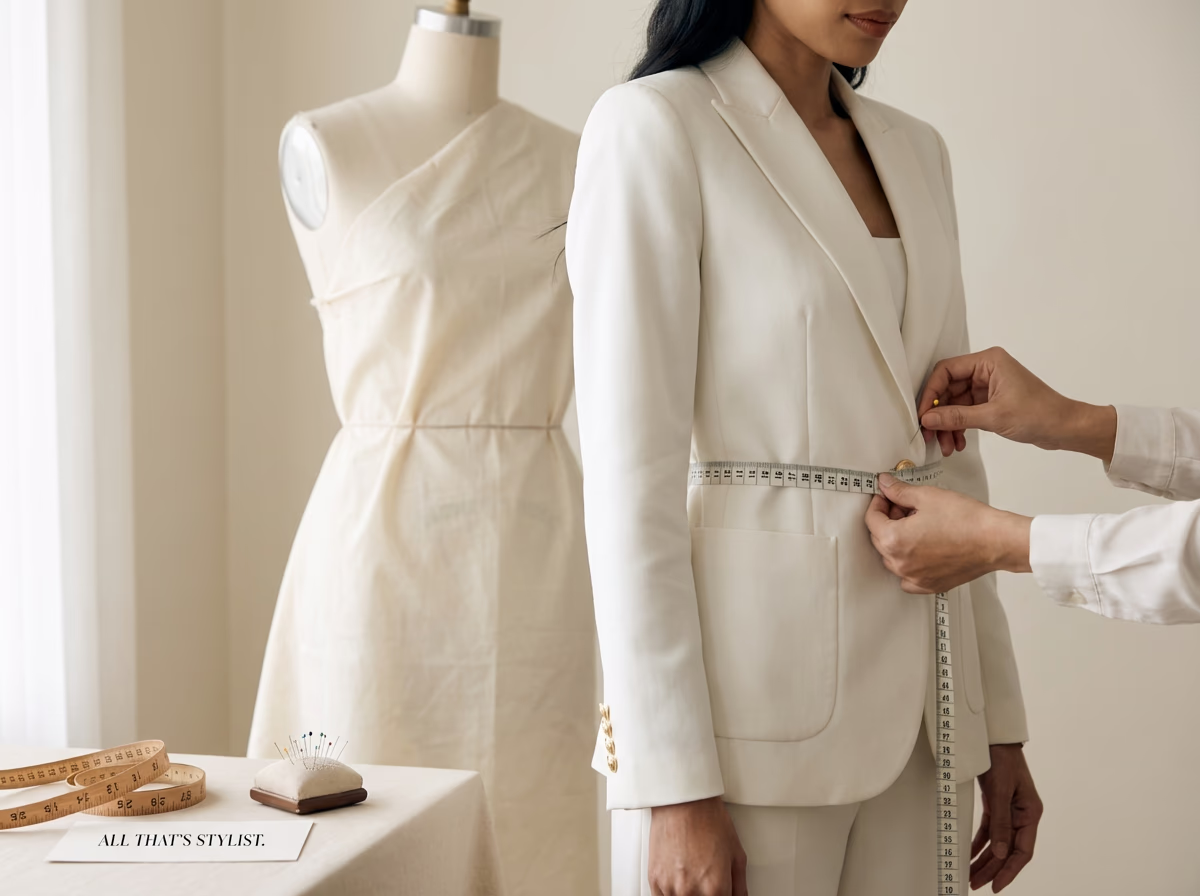
If you want a quick, objective starting point, our free body type calculator identifies your shape from five measurements and shows it visually — along with what to wear (and what to skip) for your proportions.
Proportion Over Shape
The most useful concept from body shape dressing is proportion. A long-torso person looks balanced in higher-waisted bottoms. A short-torso person benefits from lower or mid-rise fits. This is not about "fixing" your body — it is about using proportion to create visual harmony between the garment and the frame.
Common Mistakes
The biggest mistake is treating body shape rules as absolutes. "Pear shapes should never wear horizontal stripes" is bad advice. A well-placed stripe in the right width and color can look fantastic on any body. Rules that restrict rather than empower are outdated.
A Stylist's Take
We rarely talk about body shapes with our clients in the traditional sense. Instead, we focus on proportions and preferences. Some clients want to emphasize their waist. Others want an elongated silhouette. Others just want to look professional without thinking about it. Our job is to find the cuts and fits that achieve their specific goals — not to impose a body-shape framework that makes them feel limited. The body you have is the starting point, not the problem.
Related Terms
- Kibbe Body Types — A more nuanced body typing system that goes beyond basic shapes
- Proportion Dressing — The principle of visual balance that replaces rigid shape rules
- Silhouette Types — Understanding garment silhouettes and how they interact with your frame
- Fit Guide — How to recognize whether clothes fit properly on your body
- Body Type Calculator — Free tool that identifies your body shape from five measurements
Want Expert Fit Guidance?
Our style consultation includes a proportional body assessment that goes far beyond generic shape categories. You will learn exactly which cuts, rises, and silhouettes create the effect you want — personalized to your frame and your goals.
Learn more about our personal stylist services, read our color analysis guide, or explore more style guides.