Why It Matters
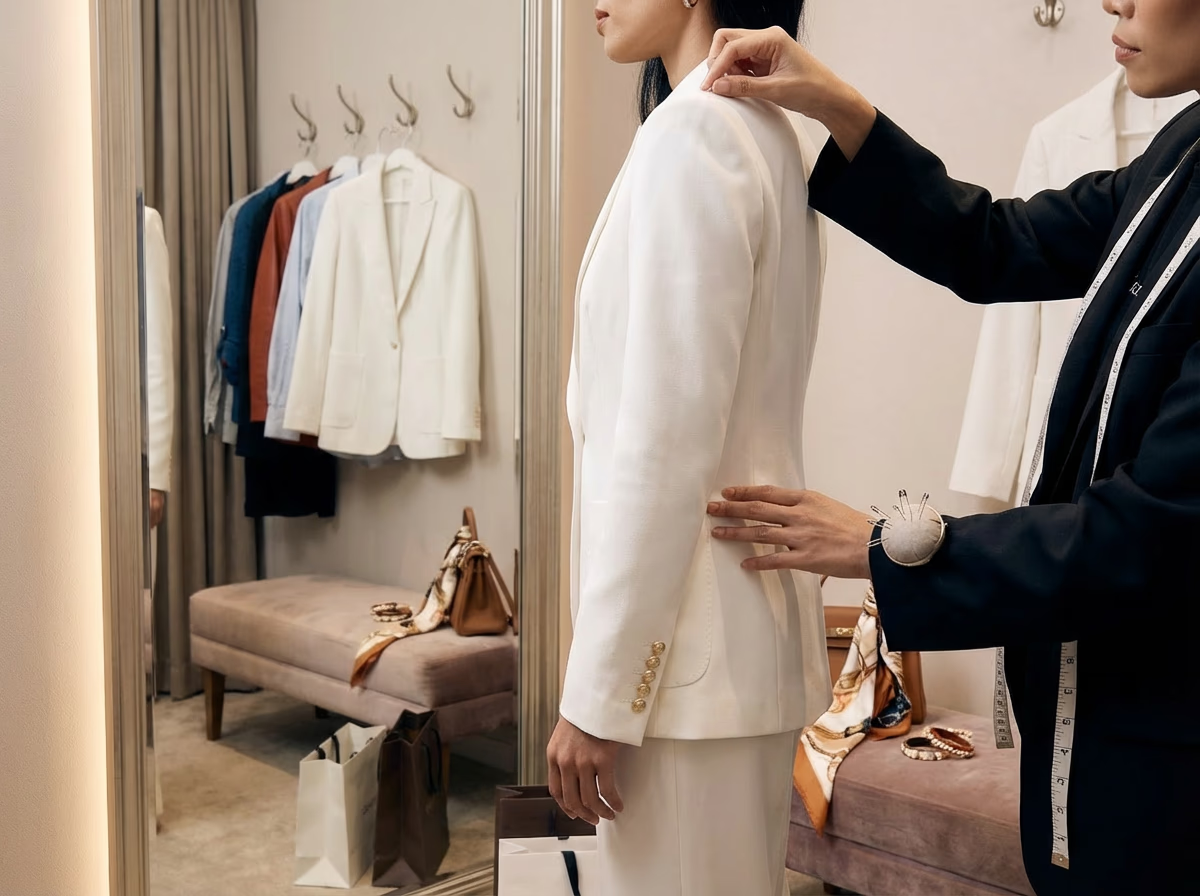
You can spend thousands on premium clothing and still look off if the fit is wrong. Conversely, affordable pieces that fit perfectly look significantly more expensive than they are. Fit is the great equalizer — the thing that separates someone who looks intentionally styled from someone who looks like they grabbed whatever was closest.
In Bangkok, where professionals move between air-conditioned offices and tropical heat daily, fit becomes even more critical. Clothes that are too tight trap heat and restrict movement. Clothes that are too loose look sloppy rather than relaxed. The sweet spot — intentional fit that works with your body — requires knowing what to look for.
How It Works
Key Fit Points by Garment
| Garment | Good Fit Signs | Bad Fit Signs |
|---|---|---|
| Blazer / Jacket | Shoulder seams align with shoulder bone; collar sits flat against neck; can button without pulling | Shoulder seams drooping past shoulder; X-shaped pulling at button; collar gaping away from neck |
| Button-Down Shirt | Smooth across chest when buttoned; enough room to pinch 2cm of fabric at sides; cuffs hit wrist bone | Gaping between buttons; fabric billowing at waist; sleeves too long or too short |
| T-Shirt / Casual Top | Sleeve hits mid-bicep; hem hits mid-hip; smooth through torso without clinging | Shoulder seams falling off shoulder; riding up at the waist; too tight across chest or stomach |
| Trousers | Sits at natural waist or intended rise; no pulling across thighs; clean front with no bunching | Fabric pulling across hips or thighs; waistband gaping; excessive bunching at ankles |
| Skirt / Dress | Sits at intended waistline; does not ride up when walking; hemline is even | Twisting to one side; riding up constantly; pulling across hips |
The Fit Hierarchy
Not all fit adjustments matter equally. In order of impact:
- Shoulders — If the shoulder does not fit, the entire garment is compromised. This is the hardest area to alter, so get it right when buying.
- Length — Trouser length, sleeve length, jacket length. These are the easiest and most impactful alterations.
- Torso — Taking in the waist or body of a garment is relatively straightforward and transforms the overall silhouette.
- Details — Sleeve width, collar adjustments, and dart placement. These are refinements that elevate good fit to great fit.
This is where understanding tailoring vs off-the-rack becomes valuable. Knowing which fit issues a tailor can fix — and which they cannot — saves you from buying pieces that will never look right.
The Intentional Oversized Exception
Modern style embraces oversized silhouettes, but there is a clear line between intentionally oversized and simply too big. Intentional oversized pieces maintain structure somewhere — a dropped shoulder that is precisely placed, an oversized blazer with correct sleeve length, wide trousers with a defined waist. Random excess fabric is not a style choice; it is a bad fit.
Common Mistakes
The most common fit mistake is buying the size you want to be rather than the size you are. A medium that is too tight does not look like a medium — it looks uncomfortable. The number on the label is irrelevant; how the garment sits on your body is everything.
A Stylist's Take
Fit is the first thing we address with every client. Before colors, before style direction, before shopping — we establish what good fit looks like on their body. Most clients are surprised by how much a simple alteration transforms a garment they had written off. Understanding proportion dressing gives you the framework, but fit mastery gives you the execution. The combination is what makes someone look effortlessly polished.
Related Terms
- Body Shape Dressing — Understanding your body type as a foundation for choosing the right fits
- Proportion Dressing — The visual balance system that good fit enables
- Tailoring vs Off-the-Rack — When to alter existing garments for better fit and when to buy custom
Perfect Your Fit
Learn exactly how clothes should fit your body. Our style consultation includes a personalized fit assessment that transforms how you shop and how you look — starting with what you already own.
Learn more about our personal stylist services, read our color analysis guide, or explore more style guides.