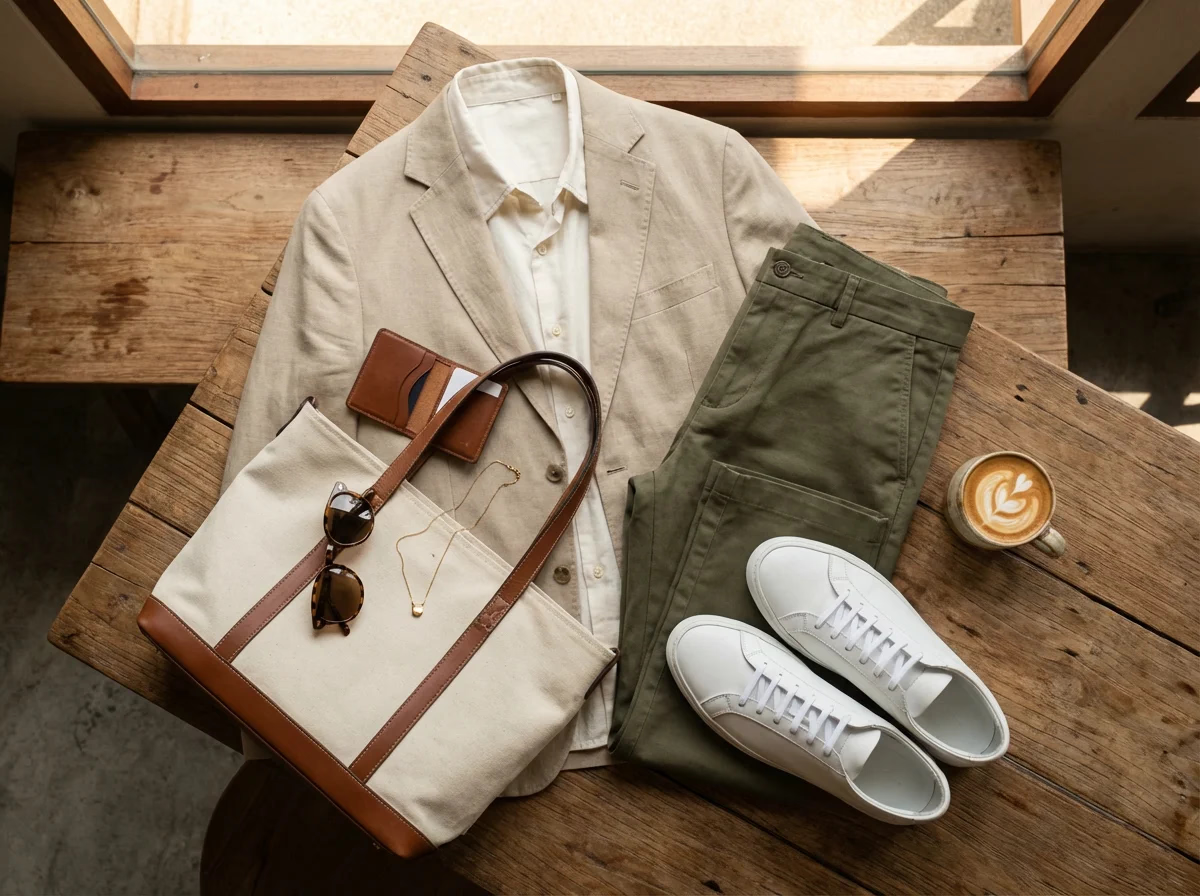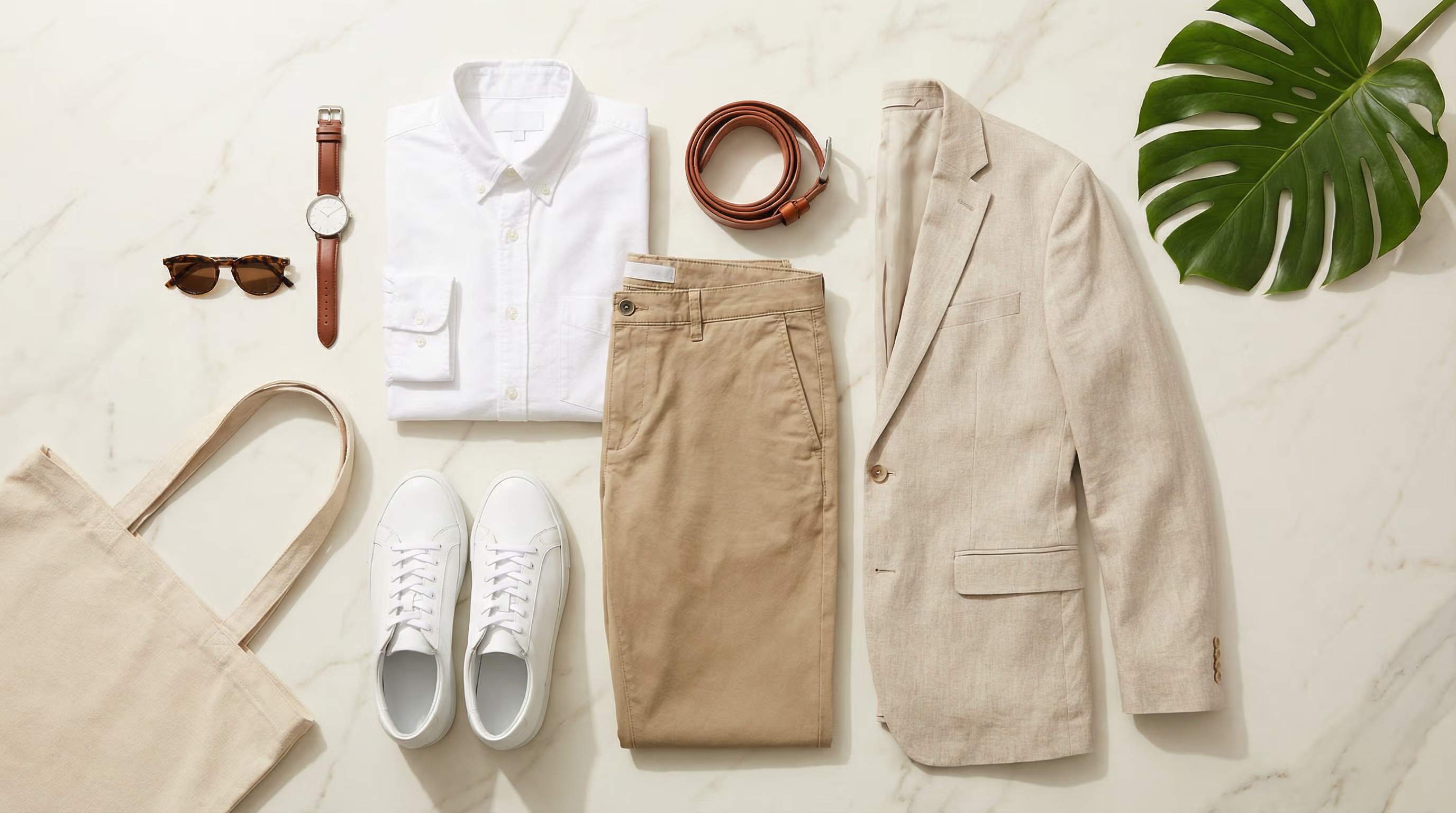
"Business Casual" is the most common dress code in corporate Thailand and the least understood. Ask ten people on your team what it means. You will get polo shirts, full suits without ties, and everything between.
Bangkok's heat makes this worse. Your team walks through 35-degree air to reach a 22-degree office. A policy written for London or Singapore fails here within a week. The dress code you need accounts for boardrooms, commutes, and monsoon season in the same document.
This guide is for HR directors, office managers, and leadership teams building a company-wide dress code. If you are choosing your own outfits, see our individual guide instead.
Why Your Company Needs a Defined Dress Code
A vague dress code creates more problems than no dress code at all. When the policy says "dress professionally" and nothing else, your team spends energy guessing instead of working.
What Ambiguity Costs You
Morning decision fatigue. Employees unsure about the dress code spend an extra 15 minutes each morning choosing clothes. In a team of 50, that adds up to 12.5 hours of lost focus per day.
Inconsistent client perception. Three team members walk into the same client meeting wearing three levels of formality. The client notices. They read it as a company that does not pay attention to detail.
Avoidable HR friction. Vague policies produce grey areas. "Why was I told my outfit was wrong when my colleague wears the same thing?" No HR manager wants that conversation.
Hiring signals. Candidates evaluate your culture during interviews. An office where attire ranges from gym clothes to three-piece suits signals confusion, not flexibility.
Three Levels of Business Casual for Bangkok
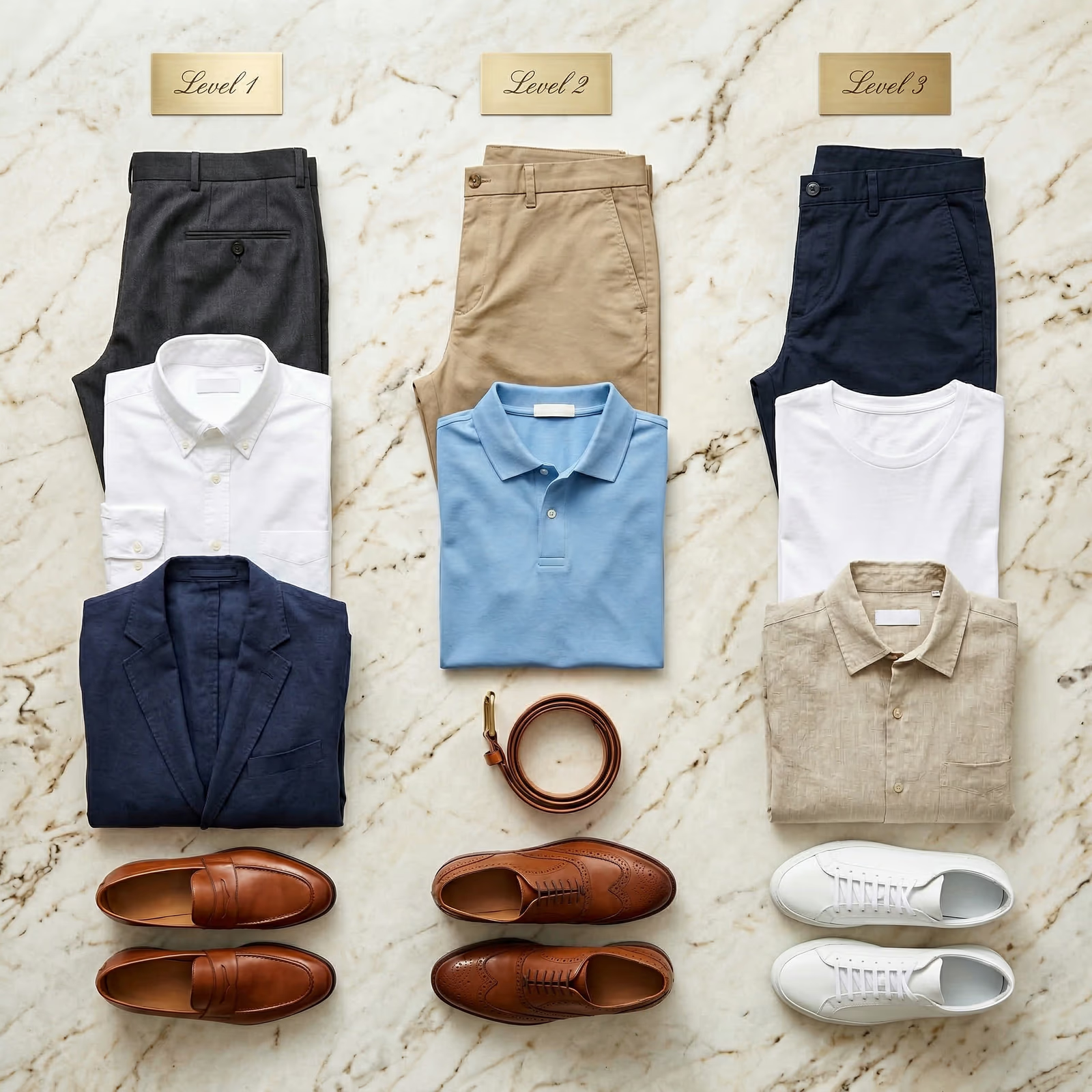
"Business Casual" on its own is too broad to enforce. We recommend defining three levels so your team and managers share a common vocabulary.
| Element | Level 1: Smart Business Casual | Level 2: Business Casual | Level 3: Smart Casual |
|---|---|---|---|
| Industries | Finance, law, consulting, MNCs | Tech, marketing, general corporate | Startups, creative, co-working |
| Tops (Women) | Quality blouse or collared shirt | Blouse, quality knit, or smart top | Quality t-shirt, modern top |
| Tops (Men) | Long-sleeve collared shirt | Collared shirt or quality polo | Quality polo, casual button-down |
| Bottoms (Women) | Tailored trousers or pencil skirt | Chinos, ankle pants, or midi skirt | Dark jeans, casual skirts |
| Bottoms (Men) | Chinos or wool-blend trousers | Chinos in various colors | Dark jeans, tailored shorts (if policy allows) |
| Outerwear | Blazer recommended | Blazer optional, cardigan OK | Optional, casual layers |
| Footwear (Women) | Heels or structured flats | Low heels, loafers, clean flats | Clean sneakers, modern sandals |
| Footwear (Men) | Leather shoes, polished | Leather loafers or brogues | Clean minimal sneakers, loafers |
| Accessories | Understated, max 3 pieces | Moderate, professional | Personality-expressing, moderate |
| Blazer frequency | Daily or for all meetings | Available for client meetings | Rarely needed |
| Denim | Never | Dark, tailored only on casual days | Yes, dark wash, no distressing |
How to Choose Your Level
Two factors matter most: how often your team faces clients and what your industry expects.
A wealth management firm where advisors meet high-net-worth clients sits at Level 1. A SaaS company where engineers rarely see clients can operate at Level 3. Most companies land at Level 2, with a standing instruction to shift up one level on client-facing days.
Your company culture matters too. A brand built on innovation loses credibility in a conservative dress code. A firm built on trust undermines itself in casual attire. Match the level to who you are, not who you wish you were.
Overdressing alienates as much as underdressing. A company enforcing Level 1 when their clients and competitors operate at Level 2 creates discomfort and signals that appearance matters more than substance. Match your level to your reality.
Dressing for Bangkok's Climate
Bangkok's weather is the reason you cannot copy a dress code from any temperate city. Your policy must address heat, humidity, and the daily 15-degree swing between outdoor air and office air conditioning.
Recommended Fabrics for Bangkok Heat
Specify acceptable fabrics in your policy, not just garment types. The wrong fabric turns a professional outfit into visible misery.
Recommended:
- Linen. Best breathability. Accept that light wrinkling is part of the fabric's character.
- Lightweight cotton. Breathable and easy to maintain. Specify thin-weave cotton, not heavy oxford cloth.
- Tencel and Modal. Moisture-wicking, wrinkle-resistant, sustainable. Strong performers in tropical offices.
- Silk and satin. Cool against skin. Best for blouses and accent pieces.
- Performance blends. Modern fabrics with stretch and moisture management. Accepted in professional settings now.
Avoid (and name these in the policy):
- 100% polyester (traps heat)
- Heavy wool or tweed
- Thick denim
- Non-stretch synthetics
Sample policy language: "Clothing should be constructed from breathable, lightweight fabrics suitable for Bangkok's tropical climate. Recommended materials include linen, lightweight cotton, Tencel, and performance blends. Heavy, non-breathable fabrics are discouraged."
Colours That Work in Tropical Climates
Colour in Bangkok is both aesthetic and practical.
For daily wear:
- Light neutrals: stone, beige, cream, light grey
- Cool mid-tones: navy, muted blue, sage green
- White (with appropriate undergarments)
Use with intention:
- Black absorbs heat outdoors but reads as authoritative in air-conditioned meetings
- Dark tones work on days with minimal outdoor exposure
- Bright colours serve as accent pieces, not full outfits
Sample policy language: "Lighter colour palettes are encouraged for daily wear given Bangkok's climate. Darker tones are appropriate for client meetings and presentations. Neon colours, loud patterns, and graphic prints fall outside our professional image."
Layering Strategy for AC vs. Outdoor
The temperature gap between Bangkok's outdoor heat (32-37 degrees) and indoor air conditioning (20-24 degrees) shapes every wardrobe decision.
Include in your policy:
- Encourage employees to keep a blazer or cardigan at their desk
- Allow lighter tops for the commute, with a layering piece for the office
- Provide guidance on outfits that work in both environments
Sample policy language: "We recommend keeping a blazer or cardigan at your desk for meetings and air-conditioned spaces. Clothing appropriate for the commute should transition to the office with the addition of a layer."
Footwear That Works in Bangkok
Bangkok's combination of heat, occasional flooding, and long walks between BTS stations and office lobbies requires practical footwear thinking.
Include in your policy:
- Allow employees to commute in comfortable shoes and change at the office
- Provide storage (locker or under-desk space) for office shoes
- Specify commute footwear vs. office footwear if standards differ
- During monsoon season (June through October), allow weather-appropriate adjustments
Women's office footwear: Low heels, structured flats, loafers, clean leather sandals (closed-toe for client meetings)
Men's office footwear: Leather loafers, brogues, clean leather shoes. Clean minimal sneakers at Level 2 and 3 only.
Sample policy language: "Employees may commute in comfortable footwear and change into office-appropriate shoes upon arrival. Office footwear should be clean, well-maintained, and appropriate to the formality expected for the day's schedule."
Writing Your Dress Code Policy
A useful policy is specific enough to remove guesswork and short enough that people read it. One page, two at most.
Dress Code Policy Template Checklist
- State the company's dress code level (Level 1, 2, or 3)
- Define acceptable tops, bottoms, footwear, and outerwear for each gender
- Specify acceptable and unacceptable fabrics for Bangkok's climate
- Address grooming standards (hair, nails, fragrance)
- Include guidelines for client-facing days vs. internal days
- Note seasonal adjustments (monsoon footwear, hot season fabrics)
- Specify casual Fridays or dress-down days (if applicable)
- Include guidelines for company events and off-site meetings
- Name the point of contact for dress code questions
- State the process for addressing dress code concerns (private, constructive)
What to Include
Do:
- Use photos or visual examples wherever possible
- Provide a "when in doubt" rule (e.g., "When unsure, dress one level up")
- Acknowledge Bangkok's climate by name
- Frame positively ("We encourage..." rather than "You must not...")
- List recommended local brands and shopping locations
Don't:
- Write a 10-page document nobody reads
- Use subjective language ("dress appropriately" means something different to everyone)
- Focus only on prohibitions
- Ignore gender equity in your standards
Communicating the Policy
Handling Violations
Dress code conversations are personal. Handle them with care:
- Keep it private. Never address dress code concerns in front of colleagues.
- Reference the policy, not the person. "Our policy specifies..." not "You look unprofessional."
- Offer a path forward. "Would it help to review the visual guide together?" works better than "Go home and change."
- Document patterns, not single incidents. A one-time misjudgment is a conversation. A pattern is a performance discussion.
- Ask before judging. Financial constraints, cultural background, and personal circumstances may be the cause. Offer resources (a styling workshop, brand recommendations) rather than correction alone.
Industry-Specific Guidelines
Different industries in Bangkok carry different expectations. Calibrate your policy to your sector.
| Industry | Recommended Level | Key Considerations | Client Expectation |
|---|---|---|---|
| Banking & Finance | Level 1: Smart Business Casual | Conservative palette, quality fabrics, polished shoes. Blazer expected for client meetings. | High. Clients associate image with trustworthiness. |
| Law & Consulting | Level 1: Smart Business Casual | Dark neutrals, minimal accessories, structured silhouettes. Formality signals competence. | High. Professionalism is part of the service. |
| Technology | Level 2-3: Business Casual to Smart Casual | More flexibility, clean sneakers fine, personality expression encouraged. Overdressing reads as tone-deaf. | Moderate. Depends on client type. |
| Marketing & Advertising | Level 2: Business Casual (creative flex) | Creative expression within professional bounds. Statement accessories, considered colour. | Moderate. Creativity expected but controlled. |
| Healthcare & Pharma | Level 1-2: Smart to Standard Business Casual | Clean, conservative, hygienic appearance. Minimal jewellery for safety. Closed-toe shoes required. | High. Cleanliness and authority matter. |
| Hospitality & Tourism | Level 2: Business Casual (brand-aligned) | Must align with brand aesthetic. Guest-facing staff may follow specific uniform guidelines. | High. Staff appearance is the brand experience. |
| Real Estate | Level 1: Smart Business Casual | Project confidence. Quality fabrics and accessories signal market knowledge. | High. Clients expect advisors to look the part. |
| Startups & Co-working | Level 3: Smart Casual | Relaxed but intentional. Clean, modern, considered. Flip-flops and gym clothes still fall outside the line. | Low to moderate. Authenticity valued over formality. |
Five Mistakes Companies Make
1. The Policy Is a Wish, Not a Standard
"Dress professionally" is not a policy. Without specifics, employees interpret "professional" through their own background. One person arrives in a three-piece suit, another in clean jeans. Both believe they followed the rules.
Fix: Define your company's level. Provide examples. Include photos where possible.
2. Ignoring Bangkok's Climate
Policies imported from headquarters in cooler climates create frustration within days. Requiring long sleeves year-round at 35 degrees, or banning open-toe shoes during monsoon season, tells employees the company does not understand where it operates.
Fix: Write your policy for Bangkok. Acknowledge heat, humidity, and seasonal variation. Specify recommended fabrics.
3. Outdated Gendered Standards
Policies that require women to wear heels or skirts, or that set different grooming expectations by gender, create legal and cultural risk. Modern dress codes define professionalism in terms that apply to everyone.
Fix: Frame standards around outcomes (polished, professional, climate-appropriate) rather than gendered garments. Where you include gender-specific guidance, keep the expectations comparable.
4. Leadership Exempts Itself
A CEO in flip-flops enforcing business casual for everyone else empties the policy of meaning.
Fix: Leadership follows the same standards. If founders operate at a different level (common in startups), acknowledge it in the policy rather than letting a silent double standard develop.
5. Rules Without Resources
Telling an employee their outfit falls short without guidance on what to wear instead is criticism, not management.
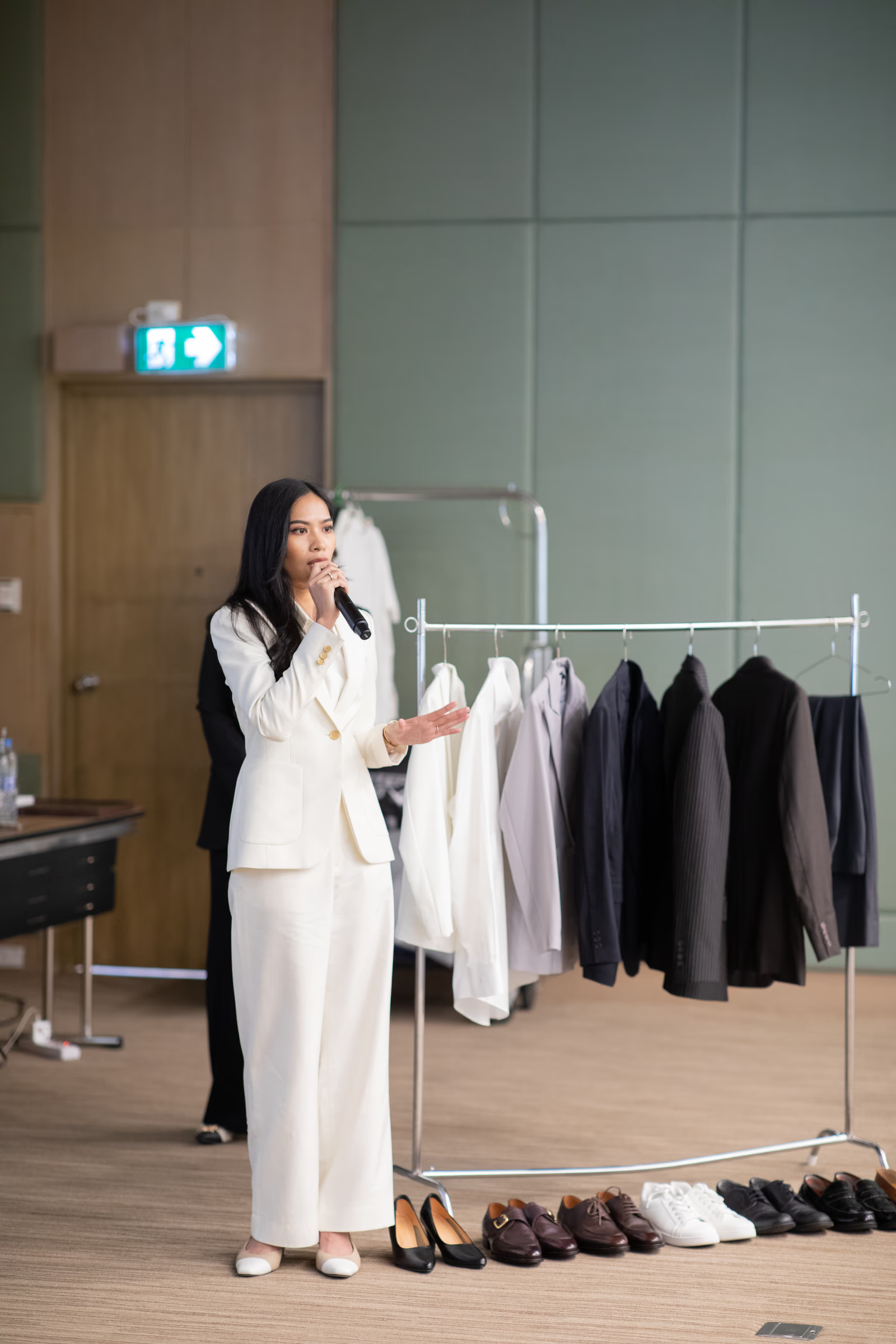
Fix: Pair the policy with practical support: a visual lookbook, recommended Bangkok shopping destinations, or a corporate styling workshop that gives every employee the knowledge to dress with confidence.
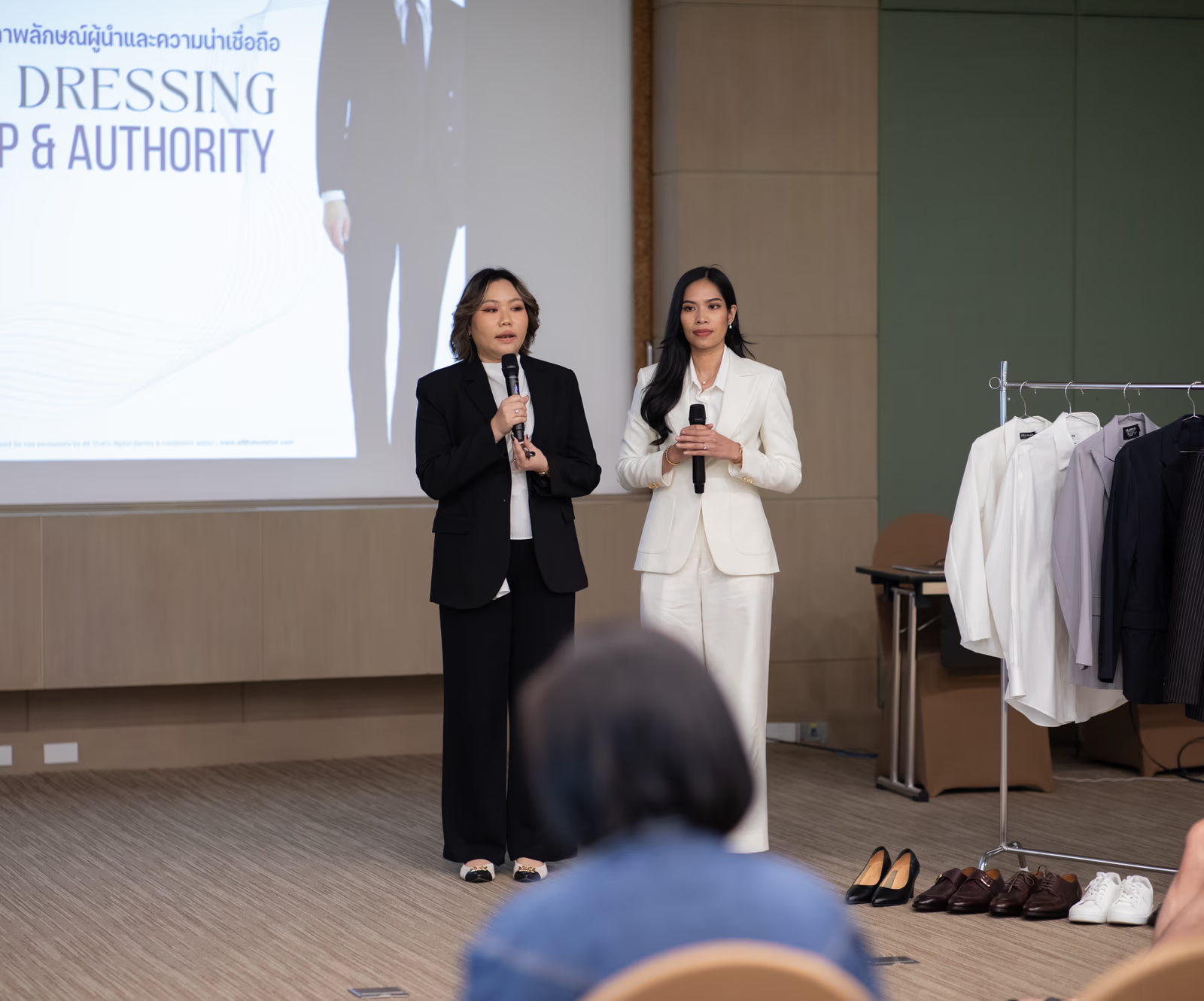
Education beats enforcement. When employees understand the principles behind professional dressing, they make better decisions on their own. A single team styling workshop often resolves dress code issues before they start.
Professional Support for Your Dress Code
Defining a policy is one step. Helping your team adopt it with confidence is the harder one.
All That's Stylist runs Corporate Dress Code Workshops built for Bangkok companies. We work with HR teams to:
- Define the right level for your industry and company culture
- Create a visual style guide your employees will reference
- Train your team on climate-appropriate professional dressing
- Provide individual consultations so each employee knows what works for their body and colouring
- Build lasting confidence so the dress code becomes instinct, not obligation
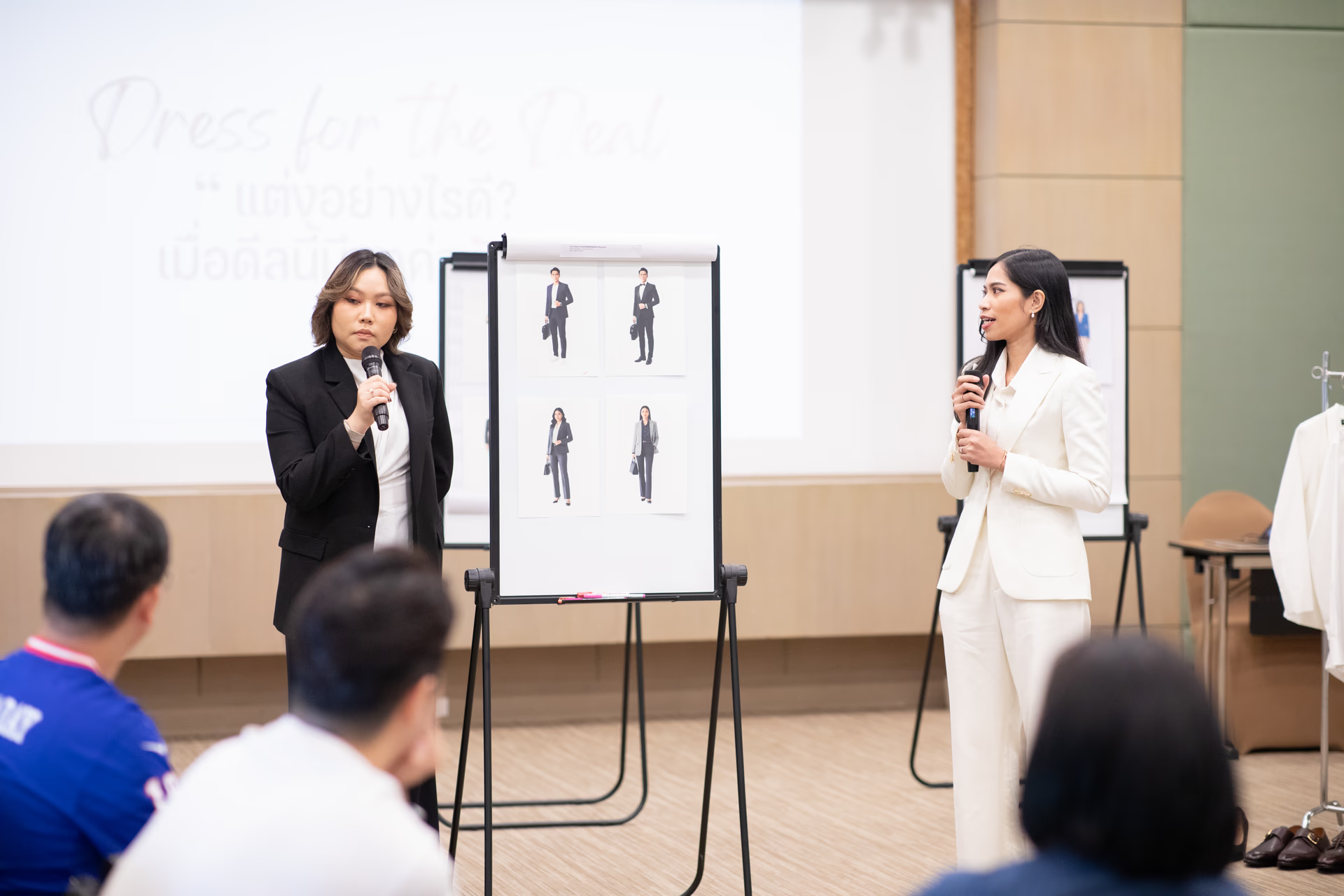
Our corporate workshops take the friction out of dress code implementation. We help your team understand the reasoning behind the policy, give personalised guidance to each participant, and create a visual reference guide your company can use long after the session ends. Available for teams of 10 to 60+.
Corporate Dress Code Workshop
Help your team implement your dress code with confidence. Interactive workshop with personal colour analysis, Bangkok-specific styling, and a custom visual guide for your company.
Learn more →Frequently Asked Questions
Corporate Dress Code Policy FAQ
How do we handle dress code for remote and hybrid employees?
Define standards for in-office days and video call days separately. On camera, employees should dress from the waist up to the same standard as in the office. Specify that virtual meeting backgrounds should also be tidy. For fully remote employees, define standards for any client-facing video calls.
Should we allow casual Fridays in Bangkok?
Casual Fridays can boost morale, but define what 'casual' means. We recommend allowing one level below your standard dress code. If your company operates at Level 1, casual Friday means Level 2, not jeans and flip-flops. Exclude client-facing days from casual dress.
How do we address cultural and religious dress requirements?
Your policy should accommodate cultural and religious dress including hijab, turban, and other religious garments. These accommodations are a legal requirement and a reflection of your company's values. Frame the policy around professional appearance standards that can be met while honouring personal beliefs.
What is the best way to introduce a new dress code to an existing team?
Give at least 30 days notice before enforcement begins. Share the policy with visual examples, explain the reasoning behind the change, and offer practical support such as a styling workshop or shopping guide. A transition period where coaching replaces enforcement helps employees adjust.
How do we handle dress code during Bangkok's monsoon season?
Include a seasonal adjustment clause. During monsoon season (June through October), allow waterproof commute footwear with office shoes stored at desks. Consider relaxing fabric requirements to accommodate faster-drying materials. The guiding principle: employees should arrive looking professional regardless of weather.
Should we provide a clothing allowance or support?
Some companies provide an annual wardrobe allowance, especially when upgrading the dress code. Even a modest amount (3,000-5,000 THB per quarter) signals shared responsibility. A one-time corporate styling workshop gives employees the knowledge to build their wardrobe within any budget.
Related Articles:
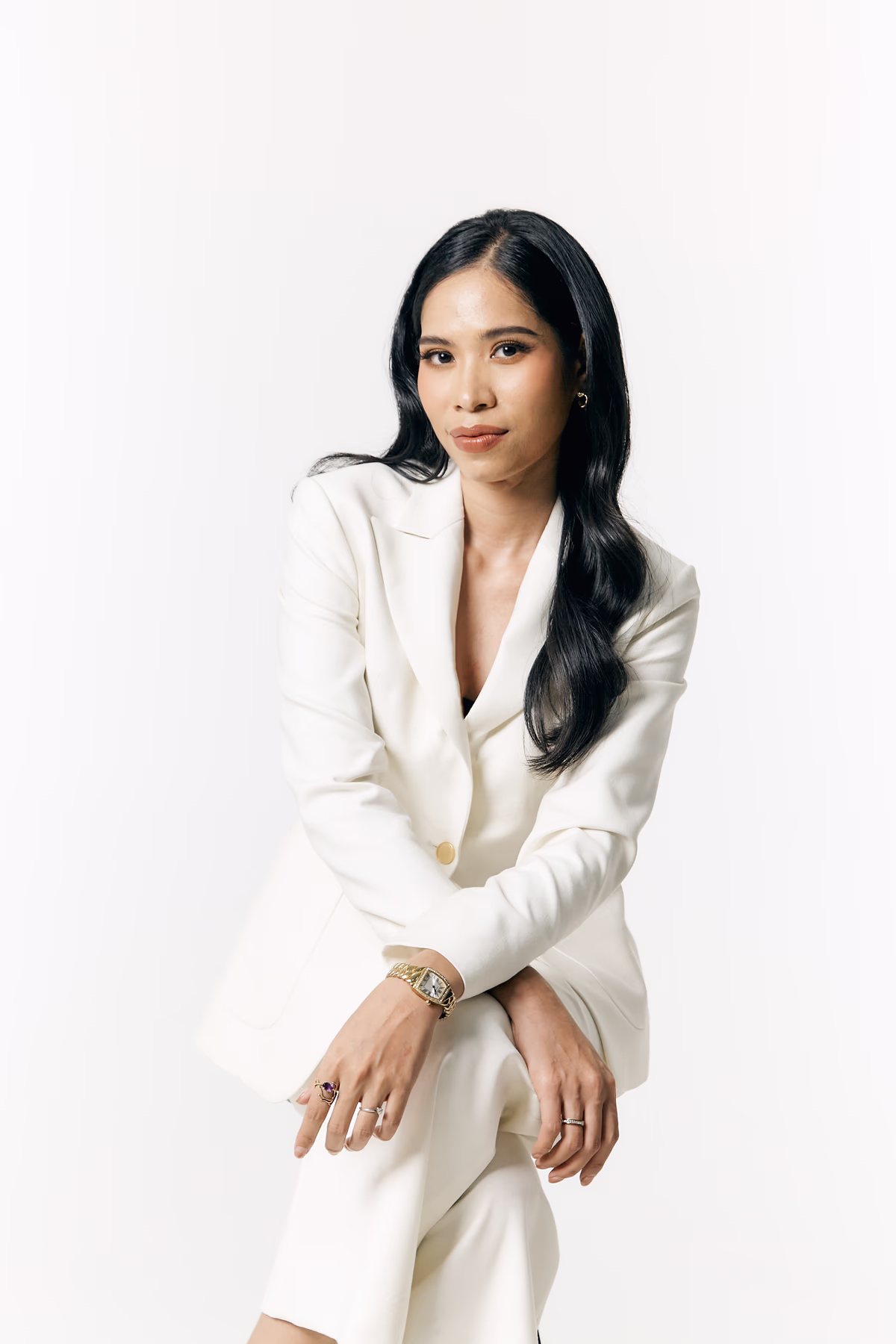
Napasorn (Mind) Phetpirun
Co-Founder & Head Stylist• 8+ years experience
Mind is the key driving force behind the vision and creative direction of All That's Stylist. With over 8 years of experience in fashion styling, including Commercial and Editorial Styling, she brings together creativity, precision, and a deep understanding of personal branding. At All That's Stylist, she serves as Head Stylist, Image Strategist, and Project Lead, overseeing creative standards, team direction, and the quality of outcomes delivered to corporate and private clients.