Why It Matters
Online color quizzes ask you to judge your own coloring, which is inherently unreliable. You might describe your skin as "warm" when it is actually neutral, or call your hair "brown" when a professional would classify it as ash-toned. These self-assessment errors cascade into wrong results.
Color draping eliminates self-perception bias entirely. The stylist observes objective changes in how your skin reacts to different colors — not your opinion of what looks good, but measurable effects like whether your skin appears smoother or more uneven, brighter or duller. This is why draping remains the gold standard in personal color analysis.
How It Works
The Draping Process
- Setup — You sit in front of a neutral background under natural or daylight-balanced lighting. Hair is pulled back, makeup is removed or minimal.
- Warm vs. cool test — The stylist drapes warm-toned and cool-toned fabrics to determine your undertone.
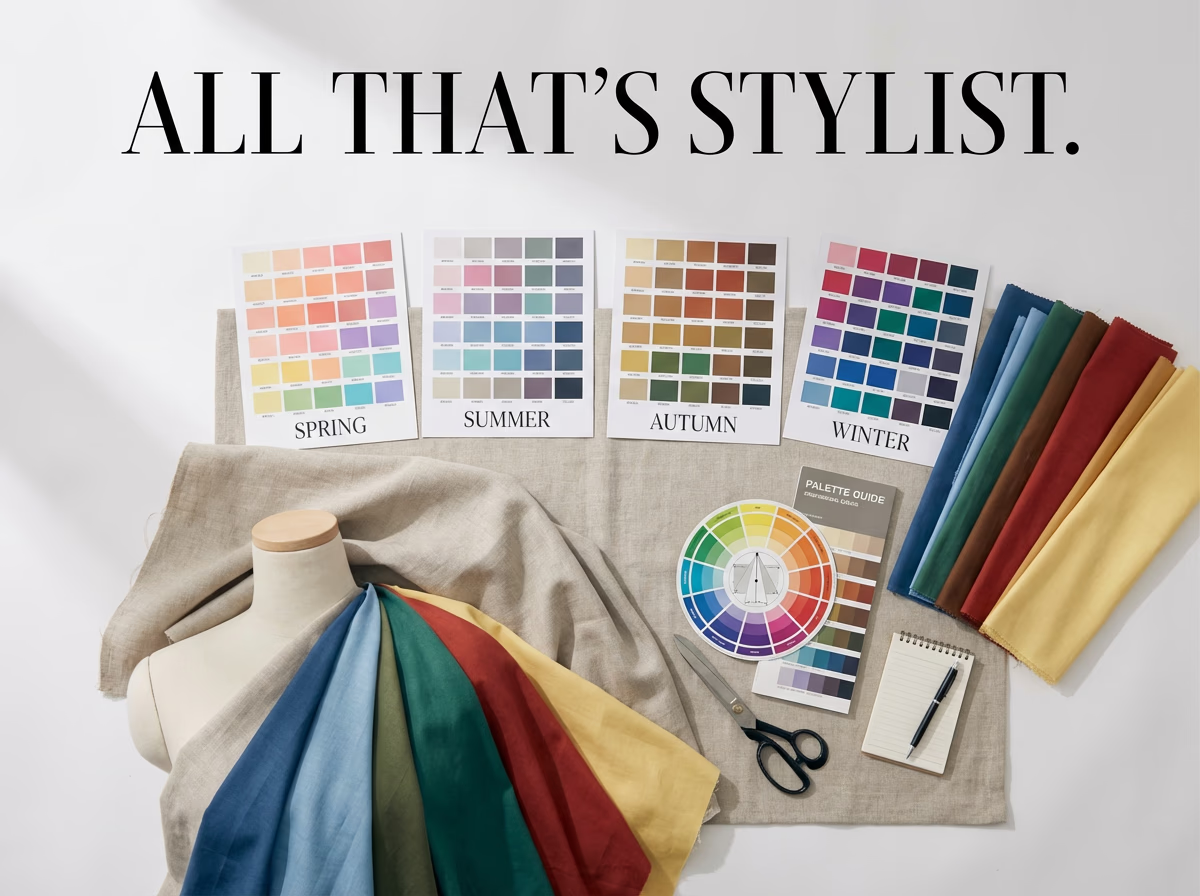
- Seasonal narrowing — Once undertone is established, the stylist drapes shades from each relevant seasonal palette to identify your best season.
- Sub-type refinement — Using the 12-season system, the stylist pinpoints your specific sub-type (e.g., Soft Autumn vs. Warm Autumn).
- Palette confirmation — Your best and worst colors are confirmed through direct comparison.
What the Stylist Observes
During draping, the stylist watches for specific skin reactions:
| When a Color Works | When a Color Doesn't |
|---|---|
| Skin looks smooth and even | Skin looks blotchy or uneven |
| Complexion appears radiant | Complexion looks dull or sallow |
| Dark circles diminish | Dark circles become more visible |
| Eyes look brighter | Eyes look flat or tired |
| Overall appearance is harmonious | Color dominates or clashes with features |
Warm Draping Colors
Cool Draping Colors
Why Quizzes Cannot Replicate This
Online quizzes rely on you accurately assessing your own features. Color draping relies on a trained professional observing objective changes under controlled conditions. The difference in accuracy is significant — studies in color consulting circles estimate that 30-40% of people mistype themselves using online tools.
Common Mistakes
Some people try to self-drape at home. While this is better than a quiz, it is limited by lighting conditions and the difficulty of objectively observing your own skin. You tend to see what you expect to see rather than what is actually happening.
A Stylist's Take
There is a moment in every draping session when the client sees it. We hold up the right color, and their face visibly changes — brighter, smoother, more alive. Then we swap to a wrong color, and the difference is unmistakable. That moment of clarity is worth the entire session. Clients stop arguing with the results and start understanding why certain clothes in their closet have always felt "off." It is the most powerful visual proof we can offer.
Related Terms
- Personal Color Analysis — The full assessment process that color draping is part of
- Seasonal Color Types — The classification system that draping results feed into
- Warm vs Cool Undertones — The first distinction established during draping
Experience Professional Color Draping
See the difference for yourself. Our style consultation includes professional color draping that reveals your true palette with certainty no quiz can match.
Learn more about our personal stylist services, read our color analysis guide, or explore more style guides.