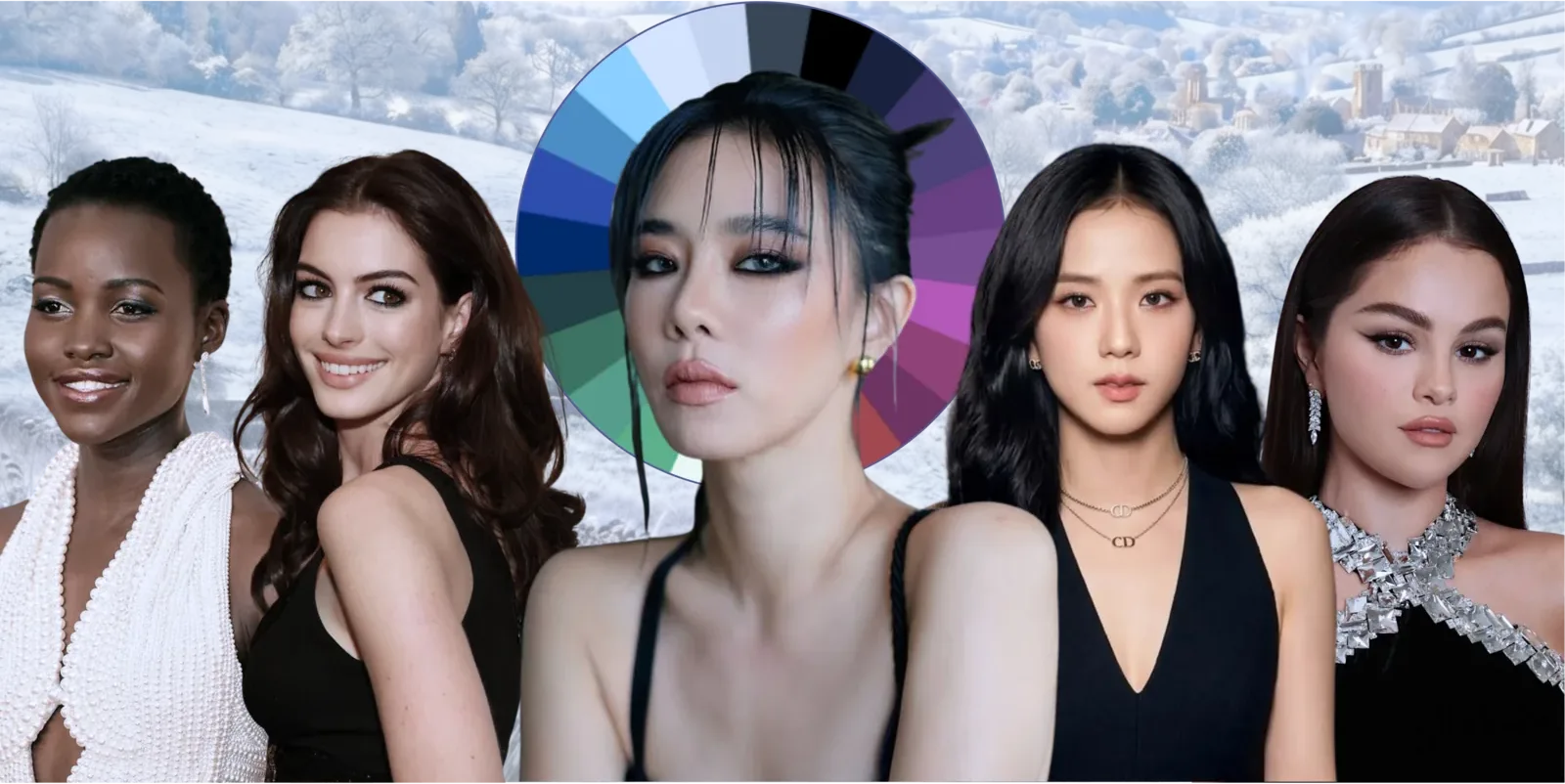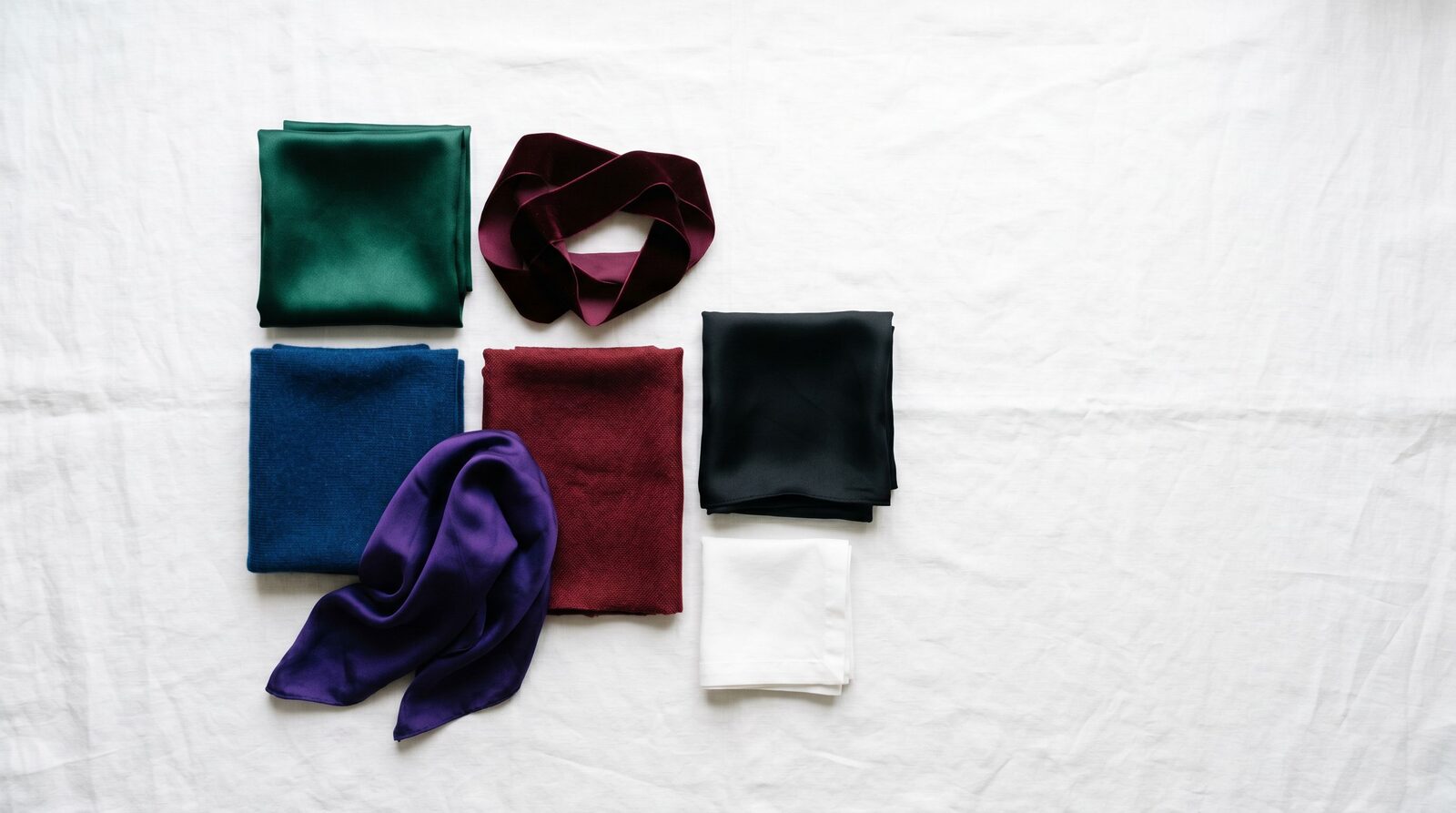






























Deep Winter is Winter at its most dramatic. Cool undertone, very high natural contrast, and the saturation tolerance to wear colours so deep they would swallow other seasons whole. If you are a Deep Winter, your face holds depth — true black, burgundy, espresso, and sapphire do not overpower you the way they overwhelm a Spring or Summer. Instead, depth anchors you and makes your features read sharper.
The most useful way to picture your palette: a winter night sky with a single jewel-toned light. Black, deep blue, deep green, and a pinpoint of clear saturation. Nothing softened by brown or warmed by gold. Everything cool, everything weighted, everything intentional.
How Deep Winter differs from True Winter
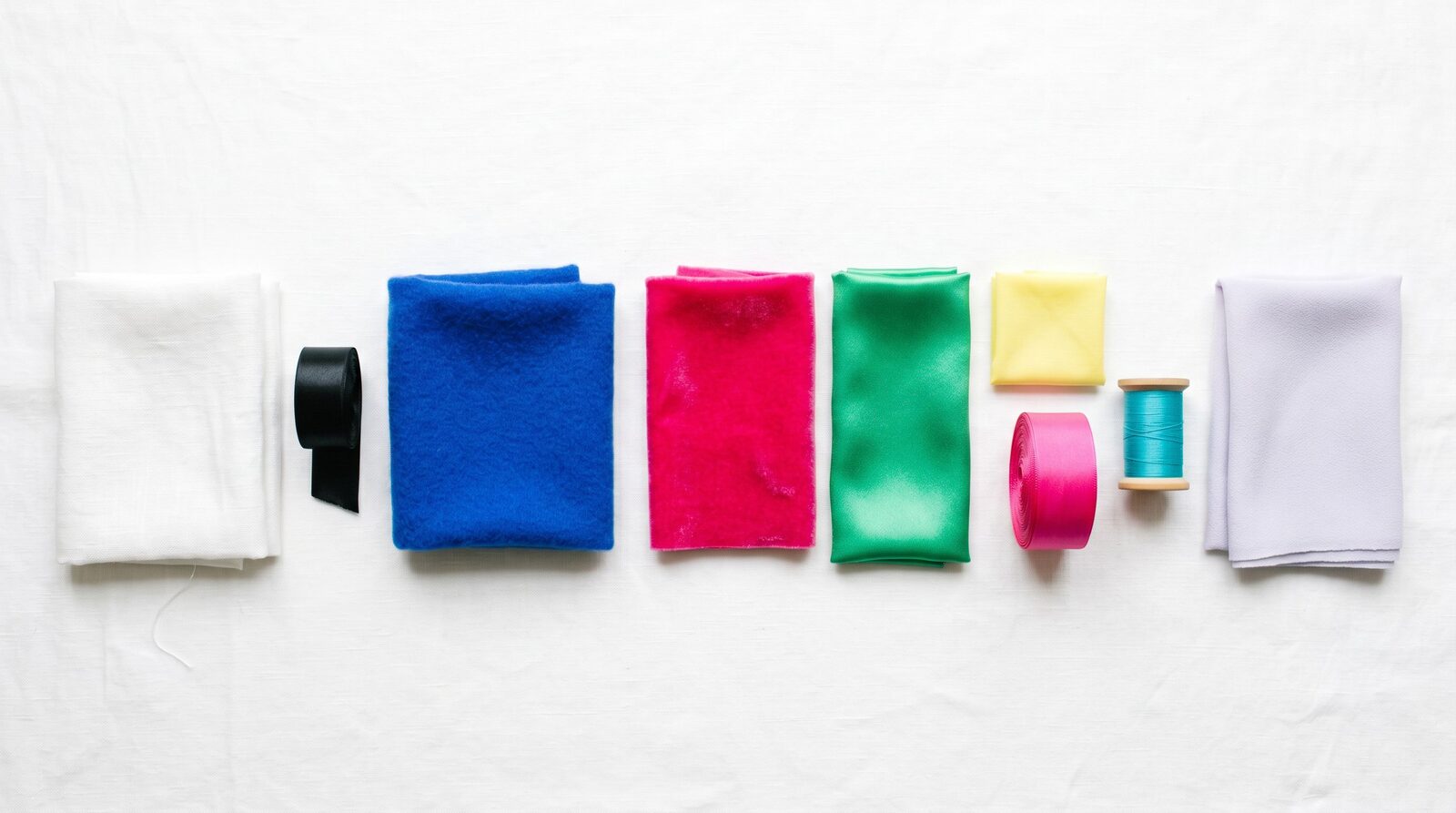
True Winter sits at the centre of the Winter Personal Color family — perfectly balanced cool, perfectly balanced clear, and able to wear icy pastels (icy pink, icy blue) at full brightness. Deep Winter shares the cool undertone but pushes the dial toward depth and saturation. Where a True Winter looks luminous in pure icy pink, a Deep Winter looks more powerful in burgundy or wine. Where a True Winter's best emerald is bright and clear, a Deep Winter's best emerald is deep and forest-like.
Practically, this means your palette is heavier on jewel tones and depth than the parent Winter palette, and lighter on pure pastels. Icy colours are not banned — you can wear pure white near the face and the occasional icy blue accent — but they work best when anchored by a deeper piece. A pure icy lemon top alone may read soft on you; the same icy lemon under a burgundy blazer reads precise.
How to know you're a Deep Winter
- Hair is very dark — true black, near-black brown, or deep cool chocolate. Often appears blue-black in sunlight, almost never has natural warm highlights.
- Eyes are deep and cool — dark cool brown, near-black, deep cool hazel, or occasionally a deep cool blue with a strong dark limbal ring.
- Skin has a cool or cool-neutral undertone and high contrast against your hair and eyes — your features look "drawn in" sharply rather than blended.
- Best blacks and burgundies look powerful on you, not goth or harsh. Camel and beige, by contrast, drain your face visibly.
- Silver and white gold flatter you, but you can also wear black hardware (matte black, hematite, jet) better than other seasons can.
- Tan reaction is to flush pink before tanning, then tan to a deeper cool olive — never a warm golden brown.
Your refined palette
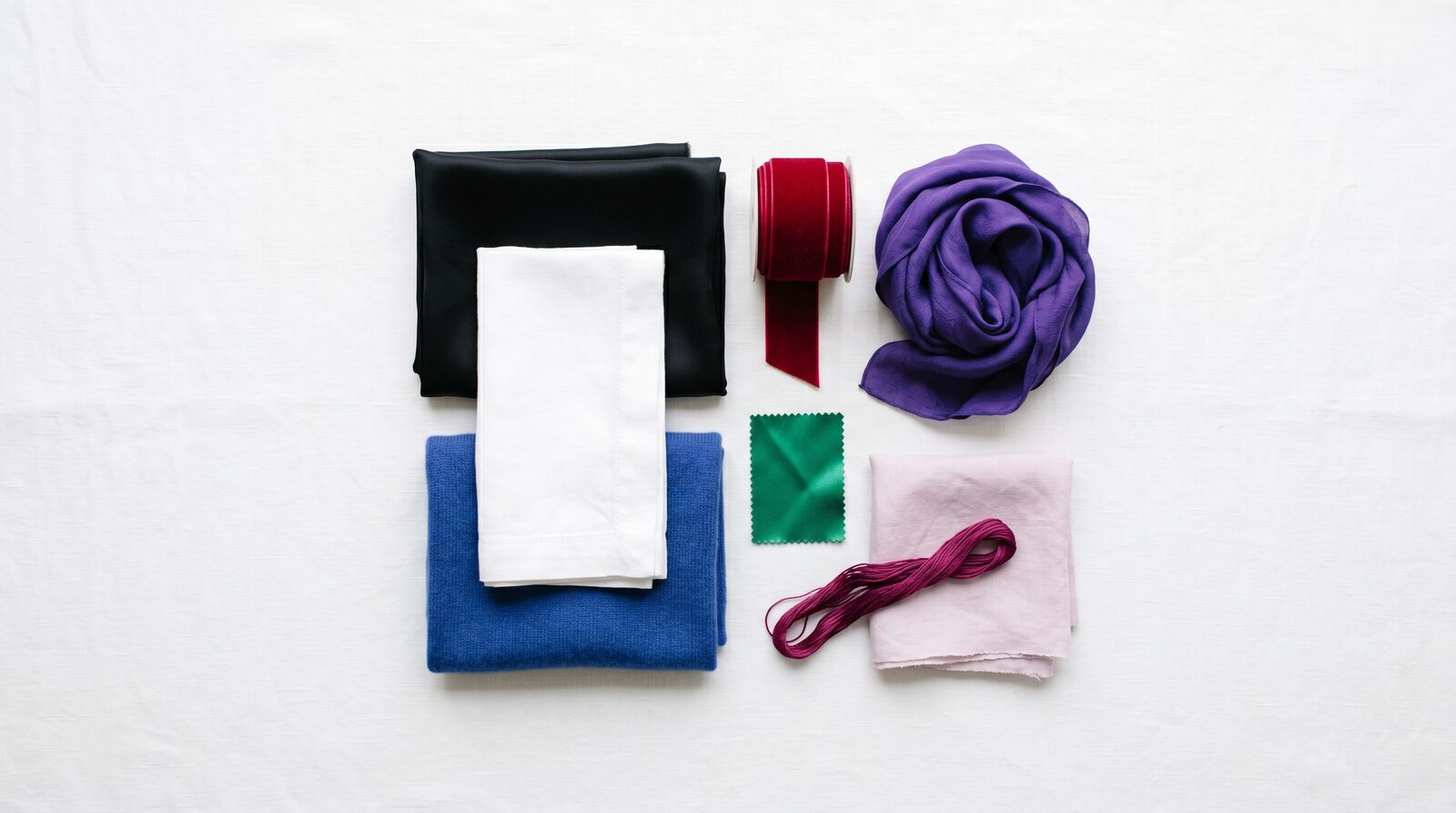
Deep Winter is built on three principles: cool undertone, very high contrast, and saturation that has been pushed deep rather than bright. Every colour in your palette is either at full strength (sapphire, magenta, true emerald) or pushed toward its richest, most concentrated version (burgundy, espresso, deep forest, deep teal). The icy pastels available to True Winter still work in small doses, but your hero pieces live in the deeper register.
Your hero colours each play a specific role. Burgundy is your formal red — your wedding-guest colour, your client-dinner colour, the deep red that flatters more than true red because it matches your weight. Sapphire or deep cobalt is your statement blue — it photographs richly and reads expensive. Deep emerald or forest green is your evening alternative to black, especially in silk or satin. Espresso is the only "brown-adjacent" colour you can wear comfortably, because it has been pushed so cool and dark it functions almost as a neutral.
Together, these colours create a wardrobe that looks both dramatic and refined — never washed out, never costume-bright. The depth does the work; you do not need to add embellishment.
What to wear
Best neutrals
- True black for tailoring, evening, and anchor pieces
- Pure white shirts (not cream or ivory) for crispness near the face
- Charcoal grey for everyday separates instead of warm browns
- Espresso for trousers, boots, and leather goods when you want depth without black
- Deep navy as a softer alternative to black for daytime
Statement colors
- Burgundy for blouses, dresses, and formal moments
- Sapphire or deep cobalt for blazers and silk pieces near the face
- Deep emerald or deep forest for evening
- Magenta or wine red as a sharp pop of colour
- Royal purple for an unexpected, polished alternative to navy
Print and pattern
- Black-and-white prints (polka, gingham, geometric) suit your contrast naturally
- Deep jewel-tone florals on a dark background — look for burgundy on black or emerald on navy
- Avoid earthy florals, animal print in warm tones, and pastel washes — they fight your depth
- Bold colour-blocking with two deep palette colours (burgundy + sapphire, emerald + black) reads sharp
Metals
- Silver, white gold, and platinum for fine jewellery
- Gunmetal, hematite, and matte black for hardware — you wear these better than any other season
- Pearls in white, grey, or black; avoid warm cream pearls
- Avoid yellow gold and warm copper near the face
Makeup undertone
- Foundation: cool or cool-neutral, never yellow-based
- Lipstick: burgundy, wine, deep berry, true plum, blackened cherry, cool deep red. Skip orange, coral, and warm nudes.
- Eyeshadow: charcoal, true black, deep plum, navy, cool silver, espresso. Skip warm bronze.
- Blush: cool berry, plum, or deep rose rather than peach
What to avoid (and why)
- Camel and warm beige — they sit warm and mid-toned against your cool deep colouring and visibly drain your face. If you need a tan piece, choose espresso or cool taupe instead.
- Mustard yellow and rust — these belong to Autumn; on you they read muddy and fight the clarity in your features.
- Olive green — same problem as rust and mustard. Choose deep emerald or deep forest for green pieces.
- Pastel peach and warm pastels — too soft, too warm, and too light to anchor your contrast. Icy pink works far better when you want a soft moment.
- Cream and ivory shirts — they read slightly yellow against your cool skin. Pure white is sharper and more flattering.
- Mid-tone warm browns (tan, cognac) — these are Autumn's territory. Espresso or charcoal carries the same wardrobe role without the colour clash.
Deep Winter in Bangkok
Deep Winter is one of the most rewarding palettes to dress in Bangkok — the depth photographs beautifully under both midday sun and evening restaurant lighting — but it requires the most care around fabric weight. The trap is treating "deep" as "heavy"; the two are not the same. A burgundy silk slip dress, a deep emerald cotton blouse, or a black linen trouser is just as cool to wear as any pastel and infinitely more striking on you.
For office wear in Sathorn or Silom, the formula that always works: black or charcoal trousers in a fluid fabric, paired with a sapphire, burgundy, or deep emerald top in silk or lightweight cotton. Add a structured black blazer for client meetings (carry it; do not wear it on the BTS). For client dinners or evening events at Lebua, ICONSIAM, or Capella, lean into your full depth — a burgundy or wine silk dress in a fluid cut is hard to beat.
For weekend and creative dress codes around Thonglor, Ari, and Ekkamai, Deep Winter becomes a quiet superpower in a city defaulting to washed beige and dusty pastel. A magenta linen dress, a deep teal jumpsuit, or a wine-red silk shirt will be the most striking thing in the room without being loud. For the hottest months, lean on lightweight burgundy and sapphire pieces rather than the very darkest blacks and forests, which absorb heat faster.
A few practical Bangkok shopping notes:
- Uniqlo is a Deep Winter goldmine for the foundations — black, charcoal, deep navy, and pure white in lightweight BTS-friendly fabrics
- Lyn Around and Disaya carry deep jewel-tone florals and burgundy pieces that suit your palette naturally
- Issue and Greyhound stock deep neutrals in clean tailoring shapes
- EmQuartier and Siam Paragon carry the international labels (COS, Massimo Dutti, Theory) where deep cool palettes appear most reliably
- For statement pieces, ICONSIAM's Thai designer floor often has burgundy and emerald silk pieces that sit perfectly in your range
How Deep Winter compares to its neighbors
vs True Winter: True Winter is cooler and clearer than you. Where you wear burgundy and espresso, True Winter wears bright cobalt and pure icy pink. If clear icy pastels make your face look brighter and lifted, you may be True Winter; if those same icy colours feel a touch washed out and you look stronger in deeper saturation, you are Deep Winter. Both share the cool undertone — the difference is depth versus clarity.
vs Deep Autumn: Deep Autumn shares your depth but flips the undertone. Deep Autumns look best in chocolate brown, rust, deep olive, and brick — colours that would look muddy on you. The test is straightforward: hold a pure black silk shirt up to your face, then a deep chocolate brown one. If black makes you look sharper and brown makes you look tired, you are Deep Winter. If the reverse is true, you are Deep Autumn.
Use your colors with our services
Knowing you are a Deep Winter is just the start; building a wardrobe that lives in your specific depth is the work. Our Style Consultation confirms your sub-season and produces a printed swatch palette you can carry shopping — including the exact burgundy, sapphire, and espresso shades that suit your specific colouring. Our Personal Shopping service then sources pieces in your exact palette across Bangkok's department stores and Thai designers. And if your closet currently mixes warm and cool deep pieces in ways that fight each other, a Wardrobe Audit sorts what stays, what gets re-purposed, and what should go.
Style Consultation
Get your refined sub-season palette plus 3 outfit examples in one session.